
Nota Simple Explained for Spanish Property: The Ultimate 2026 Buyer’s Guide
Last October, a buyer named Julian discovered a €45,000 tax lien on his Marbella villa just hours before the final signing. The deal nearly collapsed. This revelation proves why having the Nota Simple explained for Spanish property is the only way to safeguard your future home.
You’ve likely felt that familiar pang of anxiety while staring at pages of dense, foreign legal terminology. It’s a common fear. We understand the worry that a lack of local knowledge might lead to inheriting someone else’s debt or an unexpected boundary dispute.
Our 2026 guide transforms this complex registry extract into a bespoke roadmap for a secure and transparent investment. We’ll show you exactly how to verify ownership and ensure your new Mediterranean sanctuary is delivered entirely debt-free.
This deep dive examines the document’s legal weight and provides a curated checklist for spotting red flags independently. You’ll gain the clarity needed to transform a complex transaction into a confident, lifestyle-defining investment.
Key Takeaways
- Learn why this registry extract serves as the essential foundation for transparency, providing a curated snapshot of a property’s current legal status.
- Protect your investment by identifying hidden liens and financial liabilities that, under Spanish law, remain tethered to the property itself.
- Gain absolute clarity with the Nota Simple explained for Spanish property to ensure your future sanctuary is entirely free of unexpected debts.
- Navigate the seamless process of requesting official documents while learning how professional summaries can bridge the gap between complex data and clear insights.
- Discover how bespoke professional guidance facilitates a secure acquisition, transforming a technical requirement into a sophisticated step toward your new lifestyle.
Understanding the Nota Simple: The Foundation of Property Transparency
The Nota Simple serves as an official extract from the Spanish Land Registry, known locally as the Registro de la Propiedad. While it isn’t the final title deed, it stands as the most current legal proof of a property’s status. This guide provides a comprehensive Nota Simple explained for Spanish property to help you navigate your acquisition with total confidence.
Think of this document as a bespoke report that unlocks the truth about a property’s history and current liabilities. It reveals the names of all registered owners, precise boundaries, and any existing mortgages or tax debts. Transparency is your greatest asset in any luxury real estate transaction.
A fresh report is essential for every stage of a transaction to ensure you’re viewing real-time data. Most legal professionals consider a report outdated after 90 days, though savvy buyers often request a new one 24 hours before signing. The registry never sleeps, and neither should your due diligence.
The Legal Significance of the Land Registry
Spain’s land registration system operates on a principle of public faith, where registered rights always take precedence over private agreements. The Land Registrar acts as a high-level gatekeeper, ensuring every entry in the database is legally sound and verified. This meticulous approach creates a sanctuary of security for international investors seeking a reliable asset.
By prioritizing what is recorded in the registry, the system prevents surprises like undisclosed heirs or hidden easements. For a buyer, this means the registry provides a shield against the legal ambiguities that can plague less regulated markets. It’s the bedrock of trust in the Spanish real estate sector.
This system has been refined over decades to protect the integrity of every square meter of land. It ensures that the person selling the property actually has the legal right to do so. For the global elite, this level of institutional certainty is an essential component of a sound investment strategy.
Nota Simple vs. Escritura: Knowing the Difference
The Escritura is the full, formal title deed signed before a Spanish Notary during the final sale. While the Escritura is a permanent historical record, the Nota Simple is a dynamic summary designed for quick verification. It distills the most vital points from the lengthy deed into a readable format for immediate review.
This summary is often more useful for initial due diligence because it highlights current encumbrances that may have been added since the last deed was signed. These two documents work in perfect harmony to provide a seamless legal picture of your investment. One offers the historical foundation, while the other provides the contemporary reality.
Understanding this distinction allows you to move with the speed and elegance required in a competitive market. By focusing on the Nota Simple early in the process, you can identify potential hurdles before they become expensive complications. It is the key to a smooth and sophisticated buying experience.
Decoding the Report: A Curated Look at Property Details
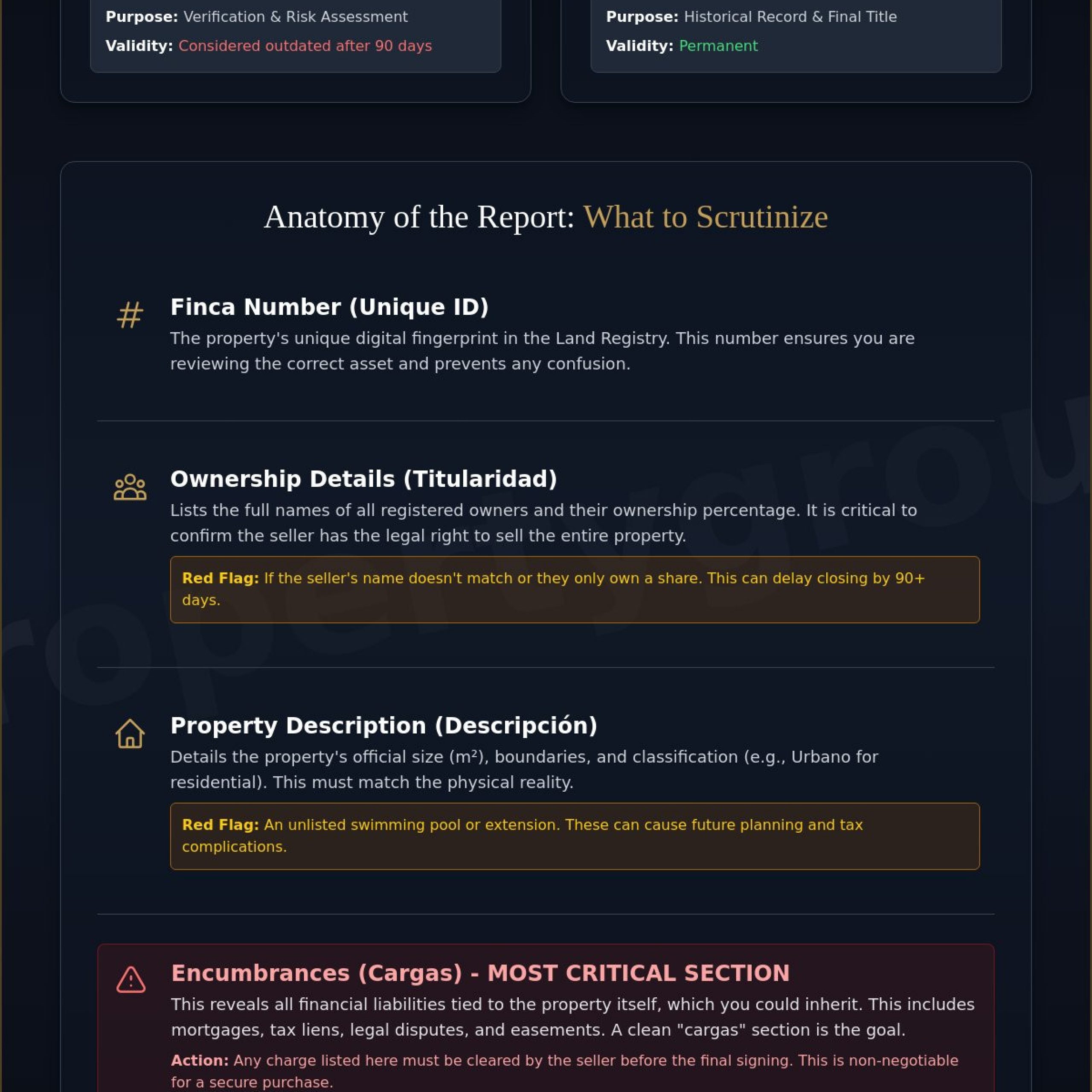
Understanding the anatomy of a Spanish property report requires a shift in perspective. Rather than viewing it as a mere bureaucratic hurdle, consider it a curated data set that reveals the true identity of your potential Mediterranean sanctuary. A comprehensive Nota Simple explained for Spanish property acts as a definitive safeguard for your capital and your peace of mind.
The core of this document is the Finca number. This unique digital fingerprint identifies the specific plot within the Land Registry, ensuring you’re looking at the exact asset described in the sales brochure. It’s the most reliable way to cross-reference the physical location with the legal record.
When reviewing the Nota Simple explained for Spanish property, you’ll find a sequence of sections that provide a transparent history of the home. This clarity is essential for a seamless transition into your new lifestyle, removing the guesswork from the acquisition process.
Ownership and Property Description
The first priority is verifying the full names of the registered owners. It’s common to find properties owned by multiple heirs or investment groups, where each party holds a specific percentage of the title. This section outlines exactly who holds the legal rights to the estate.
You must confirm that the person signing the contract possesses the legal authority to sell the entire asset. A discrepancy here can delay a closing by 90 days or more while legal titles are rectified. Our bespoke approach ensures these details are scrutinized long before you reach the notary’s office.
The physical description should match the current reality of the villa or apartment. If the report lists a 150 square meter structure but the home features a 50 square meter guest house added in 2022, you may face future planning issues. Verifying these dimensions ensures your investment is grounded in documented reality.
Classification and Land Use
Land classification dictates the rhythm of your future lifestyle and the scope of your renovation dreams. The distinction between Urbano (residential) and Rústico (agricultural) land is fundamental to your long-term investment strategy. These designations are updated by the local town hall to reflect current urban planning laws.
Residential land offers the most freedom for bespoke architectural changes and modernizations. In contrast, agricultural plots often come with strict limitations that prevent expanding the footprint of the home by even a few meters. Understanding these boundaries early prevents the frustration of restricted ambitions.
If you’re unsure about the process, learning how to get a Nota Simple will provide the raw data needed to assess these restrictions. This document also highlights if the property sits within a protected coastal zone or a historical heritage site, which can impact your ability to modify the exterior.
Securing a property that aligns with your vision requires this level of forensic detail and local passion. For those seeking an unparalleled experience in property acquisition, our team at Keys Property Group provides the expert guidance needed to unlock these exclusive opportunities.
Protecting Your Investment: Liens, Encumbrances, and Hidden Debts
Spanish property law operates on a principle that catches many international buyers off guard: debts are tied to the physical asset rather than the individual owner. If you acquire a villa with outstanding local taxes or unpaid community fees, those liabilities become your personal responsibility the moment the deed is signed. Understanding the Nota Simple explained for Spanish property is the first step in identifying these hidden liabilities before they become your burden.
The document serves as your ultimate shield, ensuring you don’t inherit a stranger’s financial mistakes while trying to secure your own sanctuary. A comprehensive in-depth guide to the Nota Simple reveals how this registry extract exposes tax embargoes, court proceedings, and unpaid utility levies. Ensuring the report is “clean” or “libre de cargas” represents the baseline for any secure real estate transaction in 2026.
This level of due diligence is essential for maintaining the integrity of your investment and your long-term peace of mind. According to data from the Colegio de Registradores, nearly 90% of urban properties carry at least one registration entry that requires verification. Relying on an updated report issued within the last 24 to 48 hours provides the most accurate snapshot of the property’s legal standing.
Mortgages and Financial Charges
Existing mortgages are standard entries within the “Sección de Cargas,” where financial burdens appear in strict chronological order based on their registration date. These charges don’t need to derail your plans, but they must be formally cancelled at the notary during the closing process. Your legal advisor will ensure the seller’s bank provides a “certificate of zero debt” to facilitate a seamless transition of title.
A bespoke legal strategy handles these resolutions behind the scenes, allowing you to focus on the excitement of your new lifestyle. Most transactions involve some level of debt restructuring, which is a routine part of the Spanish registry system. With the right guidance, these financial markers are simply administrative steps toward securing your private retreat.
Easements and Rights of Way
Easements, known locally as “servidumbres,” describe the rights of third parties to use a portion of your land for specific purposes. These often include public walking paths, shared utility lines, or access routes for neighboring properties. While common, these entries can impact your future construction plans or the overall privacy of your estate.
Identifying these restrictions through the Nota Simple explained for Spanish property helps you avoid surprises after the purchase is finalized. If the report lists complex easements, seeking curated legal advice is the best way to determine how they affect your long-term vision. Knowing exactly where utility lines or access rights sit ensures your investment remains an exclusive and private sanctuary.
Clear communication with your legal team will help clarify if an easement is a minor administrative detail or a significant limitation. Every detail in the registry contributes to a transparent and secure purchase process. By addressing these factors early, you protect both the lifestyle and the financial value of your Spanish home.
Acquiring Your Nota Simple: A Seamless Step-by-Step Guide
Securing this essential document is a streamlined process conducted through the official Colegio de Registradores website. This digital gateway provides the transparency you need to move forward with absolute confidence. It’s the most reliable way to have the Nota Simple explained for Spanish property before committing your capital to a new investment.
You can typically expect a digital extract to arrive in your inbox within 24 to 48 hours. While the official report is issued in Spanish, premium agencies offer bespoke translated summaries for international investors. This service ensures every legal nuance is fully understood by your acquisition team without any linguistic barriers.
Spanish legislation grants access to these records to anyone demonstrating a legitimate interest in the land. As a prospective buyer, you possess the right to request a report on any villa or apartment across the territory. This open access underscores the inherent security and transparency of the Spanish registry system.
Required Information for a Successful Search
To initiate a search, you must provide specific identifiers that pinpoint the exact estate. The IDUFIR, or Unique Identifier of Registered Properties, is the gold standard for ensuring 100% accuracy in your results. This 14-digit code eliminates any risk of property misidentification during the transfer process.
If the IDUFIR isn’t available, you can use the owner’s full name and NIE number or the specific Finca number. When registration data is currently unavailable, providing the precise property address serves as a practical alternative. This flexibility allows your search to proceed even in the early stages of property discovery.
Spotting Red Flags and Inconsistencies
A meticulous review of the document often reveals “Afecciones Fiscales” near the end of the text. These entries indicate that the property remains subject to potential tax reviews by the regional government for a period of five years. Understanding these claims is vital for calculating your total investment exposure and potential liabilities.
Be alert for the phrase “Fuera de Ordenación,” which suggests the property sits outside current urban planning regulations. This status can restrict your ability to renovate or expand the footprint of your new sanctuary. It often stems from changes in local zoning laws implemented after the original construction date.
A critical step in your due diligence is comparing the registry data with the Catastro records. Discrepancies in square meterage or land boundaries can lead to future legal complications or unexpected tax burdens. Having the Nota Simple explained for Spanish property helps you identify these gaps before they become costly errors.
To ensure your international investment is handled with the precision it deserves, explore our bespoke property acquisition services today.
Navigating the Spanish Market with Bespoke Professional Support
Understanding the technicalities is just the first step toward a successful acquisition. At KEYS Property Group, we transform complex legal data into a clear path toward your new home. Our team provides a bespoke service that manages every detail, from the initial search to the final signature at the notary.
We act as your trusted advisor, handling the dense bureaucracy so you can focus on your future lifestyle. By integrating legal expertise and mortgage facilitation into a single, seamless journey, we ensure your transition to Spanish homeownership is effortless. Our boutique approach prioritizes your peace of mind above all else.
Having the Nota Simple explained for Spanish property is vital, but having an expert guide by your side is what truly secures the deal. We bridge the gap between international standards and local Spanish regulations. This high-level oversight protects your capital and honors your time.
The Role of Expert Legal Assistance
A skilled lawyer acts as your primary shield during the acquisition process. They analyze the nuances of the Nota Simple to identify hidden debts or restrictive easements that could compromise your investment. Professional due diligence is the only reliable way to ensure a secure transaction in a foreign market.
While an informative extract is useful, we always recommend obtaining a “Certificación” for a more formal and binding legal guarantee. This document is signed by the Land Registrar and carries significant weight in legal proceedings. It offers a level of protection that a standard registry brief simply cannot match.
- Lawyers verify that the property description matches the physical reality of the site.
- Legal experts ensure all previous local taxes and community fees are paid in full.
- Professional oversight prevents the inheritance of “embargos” or unexpected liens.
In 2024, international buyers accounted for 15% of all Spanish property transactions, making rigorous legal checks more important than ever. Our legal partners specialize in the 2026 regulatory landscape to provide modern, ironclad protection. We ensure every document is scrutinized with precision and care.
Beyond Paperwork: Unlocking Your Spanish Sanctuary
Secure property ownership provides the essential foundation for a life well-lived. Once the technicalities are settled, you can finally enjoy the rewards of Mediterranean living and long-term asset growth. A safe purchase today ensures your sanctuary remains a source of joy for decades to come.
We invite you to uncover the best things to do in Malaga city Spain as you settle into your new home. Your investment is protected, allowing you to embrace the vibrant culture and sun-drenched landscapes of the Costa del Sol. The paperwork is behind you, and the lifestyle you imagined is finally within reach.
Owning property in Spain is about more than just square footage; it is about finding your place in the sun. Our team remains committed to your success long after the keys are in your hand. Let us handle the complexity while you discover the magic of your new Spanish life.
Unlocking Your Spanish Sanctuary with Confidence
Securing a property in Spain requires more than just a vision; it demands the clarity found within a current land registry report. Having the Nota Simple explained for Spanish property ensures you identify hidden debts or legal encumbrances before they impact your investment. This document serves as the definitive foundation for every successful transaction in the 2026 market.
Keys Property Group leverages over 20 years of expertise in the Spanish luxury market to guide you through these intricate legal landscapes. Our boutique approach provides end-to-end legal and mortgage support, ensuring your transition to a Mediterranean lifestyle is entirely seamless. We act as your trusted advisor, transforming a complex financial exchange into a curated journey toward your new sanctuary.
Your dream of an upscale European retreat is within reach when you have the right keys to unlock the market. Explore our bespoke portfolio of Spanish properties to discover an unparalleled selection of exclusive residences tailored to your discerning lifestyle. We’re ready to help you navigate the Spanish market with the prestige and local passion your investment deserves.
Frequently Asked Questions
How long is a Nota Simple valid for in Spain?
A Nota Simple is legally valid for 90 days from the moment it’s issued by the Land Registry. Most Spanish banks and notaries require a fresh copy dated within the last 30 days to ensure the data is current. This ensures your investment remains protected against any last minute changes in the property’s legal status.
Can I get a Nota Simple in English?
You can request an English translation of the document directly through the official Colegio de Registradores website. While the standard registry extract is in Spanish, this translated version provides a clear overview for international investors. It’s a bespoke service designed to offer clarity during your property acquisition journey.
What happens if the Nota Simple shows a debt I didn’t know about?
Any outstanding debts listed on the document must be canceled or settled by the seller before the final signing at the notary. This ensures you receive a clean title, free from historical mortgages or tax liens. Your legal representative will use this Nota Simple explained for Spanish property to negotiate a retention of funds from the purchase price to cover these costs.
Is a Nota Simple the same as a property title deed?
The Nota Simple is a concise summary of the land register’s current state, whereas the title deed is the full legal contract of sale. Think of the deed as the permanent record and the Nota Simple as a real-time snapshot of the property’s legal health. Both documents are essential for a seamless and secure real estate transaction.
Can I request a Nota Simple without the owner’s permission?
Anyone with a legitimate interest can request this document without obtaining prior consent from the current property owner. You simply need to provide the property’s registry details or the owner’s full name to the Land Registry. This transparency allows potential buyers to perform due diligence with complete independence.
What should I do if the square meterage on the Nota Simple is wrong?
You must initiate a formal rectification process if the recorded dimensions differ from the physical reality of the home. This often involves a technical report from an architect and a notarized deed of update to align the registry with the actual size. Resolving these discrepancies is vital for securing accurate valuations and future resale potential.
Does the Nota Simple include information about the Catastro?
The document includes the unique 20-digit Catastral reference number which links the Land Registry record to the tax office database. This connection is essential for verifying that the property’s fiscal description matches its legal registration. Having this information ensures a transparent view of both legal ownership and local tax obligations.
How much does it cost to get a Nota Simple in 2026?
The official cost for a standard request through the Colegio de Registradores website is €9.02 plus VAT. Private agencies and legal firms may charge additional service fees for procurement and professional translation. This small investment provides the essential security needed to protect your capital in the Spanish market.
Properties in Nota Simple Explained for Spanish Property: The Ultimate 2026 Buyer’s Guide