
Buying Property in Spain for Rental Income: The 2026 Investor Guide
Did you know that as of 2026, you need a 60% majority vote from your building’s community of owners before you can legally list an apartment for short term stays? It’s a stark reminder that while buying property in Spain for rental income offers exceptional potential, the legal landscape is more intricate than ever. You might feel concerned about the 24% tax rate for non-EU residents or the challenge of managing a villa from thousands of miles away. We understand these pressures and are here to provide the professional assurance you need to move forward with confidence.
This guide simplifies your investment journey by turning these complexities into a clear, manageable strategy. We’ll explore the latest 2026 tax regulations, provide a vital compliance checklist for the National Rental Registry, and show you how to choose a management partner that ensures your investment thrives. From understanding the 9% ITP in Valencia to navigating new tenant protection laws, you’ll gain a sophisticated roadmap to building a profitable and secure Spanish portfolio. Whether you’re interested in modern penthouses or coastal townhouses, this is your blueprint for success in the current market.
Key Takeaways
- Determine the ideal balance between high-yield holiday lets and stable long-term leases to align your investment with your personal lifestyle goals.
- Navigate mandatory legal requirements, including securing your NIE and validating the Habitation Certificate, to ensure your property is legally fit for tenants.
- Master non-resident tax obligations by understanding the specific filing deadlines and requirements for Modelo 210 in the 2026 tax year.
- Discover how buying property in Spain for rental income requires a robust local management strategy to protect your asset while you are living abroad.
- Learn how professional support from local specialists can bridge the gap between your initial purchase and a high-performing, compliant rental portfolio.
Defining Your Rental Strategy for Spanish Property
Success in buying property in Spain for rental income depends on choosing a path that balances your financial goals with your lifestyle aspirations. Your strategy shouldn’t be an afterthought; it’s the foundation of your entire search. Whether you’re drawn to the vibrant energy of a coastal villa or the steady demand for a city apartment, your decision will influence everything from your tax liability to how often you can enjoy the property yourself. We see many investors thrive by matching their asset type to a specific demographic from the very beginning.
The property buying process in Spain must align with these ultimate rental objectives. For instance, if you’re eyeing a high-yield holiday apartment, you’ll need to confirm the building’s community of owners hasn’t restricted tourist lets. Following regulations introduced in April 2025, at least 60% of owners must approve short-term rentals in their building. Conversely, the 2026 market shows a significant shift toward medium-term rentals. These “micro-market” opportunities cater to digital nomads and remote workers, offering a sweet spot between holiday flexibility and long-term security without the same licensing hurdles.
Short-Term Holiday Letting
Holiday rentals are often the most attractive option for investors who want to use their Spanish home for personal vacations. These properties typically achieve gross yields between 5% and 8% in tourist hotspots like Malaga or Alicante. However, this model requires a high-energy approach. You’ll need professional marketing to stand out on platforms like Airbnb, where a national registration number is now mandatory as of January 1, 2026. Guest turnover is frequent. This means management intensity is high. You’ll need reliable partners for cleaning, key holding, and emergency repairs to maintain the elite standards guests expect.
Long-Term Residential Leasing
For those who prefer a steady, predictable approach, long-term leasing offers consistent monthly income with far less administrative overhead. While gross yields are slightly lower, typically ranging from 3% to 5%, the wear and tear on your investment is significantly reduced. It’s essential to understand Spain’s 2023 Housing Law, which provides tenants with substantial protections under the Urban Leasing Act (LAU). In 2026, individual landlords must respect a minimum tenancy period of 5 years. This strategy provides peace of mind but limits your own access to the property. It’s a purely financial asset rather than a holiday home.
Legal Compliance and Licensing Requirements
Securing the right paperwork is the bedrock of a successful investment. When you’re buying property in Spain for rental income, your first milestone is obtaining a Foreigner Identification Number (NIE). This unique tax ID is essential for everything from opening a Spanish bank account to signing the title deed. Alongside this, you must verify the property’s Habitation Certificate (Cédula de Habitabilidad). This document confirms the property meets the legal standards for living; without it, you cannot legally connect utilities or obtain a rental license. While local licenses focus on safety, you must also consider your Non-Resident Income Tax obligations from the moment you acquire the asset. Utilising professional legal assistance ensures that every regional administrative variation is accounted for before you sign a contract.
The Role of the Community of Owners
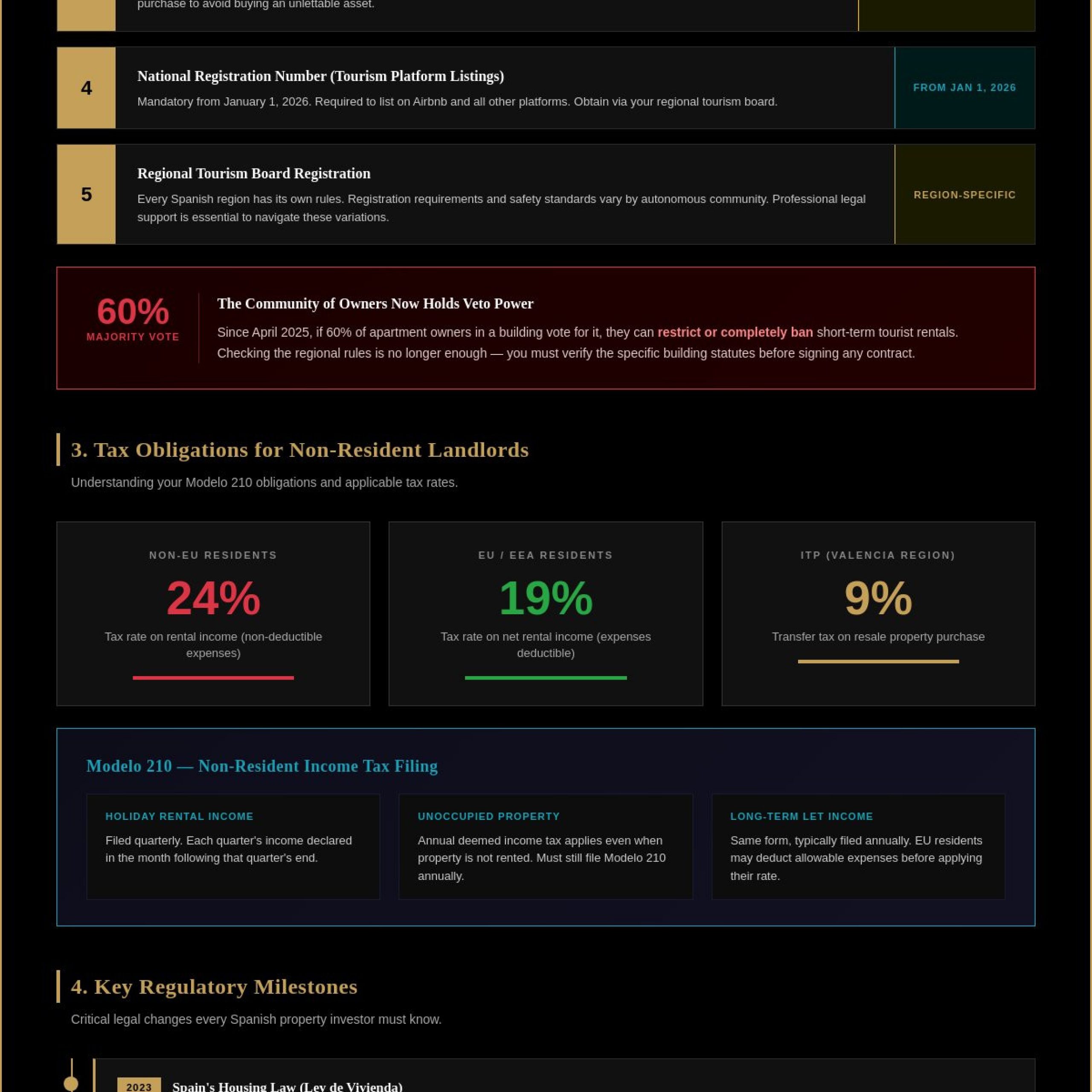
In 2026, the “Comunidad de Propietarios” holds more power than ever. Following regulations introduced in April 2025, apartment buildings can now restrict or even ban short-term holiday rentals if 60% of the owners vote in favor of the limitation. It’s no longer enough to check if the region allows rentals. You must examine the building’s specific statutes. If you’re looking at a managed complex, consult with a specialist to ensure no such prohibitions are pending. This compliance-first approach prevents you from purchasing a beautiful asset that you aren’t legally allowed to rent out to tourists.
Regional and Local Administrative Steps
Every region in Spain has its own set of rules. Since January 1, 2026, all properties rented to tourists must display a unique national registration number to be listed on platforms like Airbnb. Obtaining this requires registering with your regional tourism board. Additionally, local town halls may have specific zoning laws or temporary moratoriums on new licenses in high-density areas. Compliance doesn’t end with the license. You’re also required to report guest data to the national police within 24 hours of their arrival. Staying informed about these granular details is what separates a high-performing portfolio from one plagued by administrative fines. When buying property in Spain for rental income, these local nuances are just as important as the purchase price itself. Reaching out for a quick chat with our team can provide the clarity you need to move forward safely.
Understanding Tax Obligations for Non-Resident Landlords
Managing the fiscal side of your investment is just as critical as finding the right location. For anyone buying property in Spain for rental income, the primary document you’ll become familiar with is Modelo 210. This form is the standard vehicle for Non-Resident Income Tax (IRNR). It’s used to declare both the income you earn from tenants and the “imputed” tax for periods when the property sits empty. In 2026, Spanish tax authorities have increased their vigilance, cross-referencing data from utility companies to identify undeclared rentals. Staying ahead of these requirements isn’t just about compliance; it’s about protecting your long-term returns.
Timing is everything when it comes to Spanish tax. Rental income must be declared quarterly. These filings are due in April, July, October, and January for the preceding three-month periods. If your property isn’t rented out year-round, you’re still liable for an annual imputed income tax, which must be filed by December 31st of the following year. Beyond income tax, you must budget for the annual IBI (Impuesto sobre Bienes Inmuebles), a local property tax that generally ranges from 0.2% to 1.5% of the cadastral value. For those building larger portfolios, be aware that wealth tax considerations may also apply depending on the total value of your Spanish assets.
EU vs. Non-EU Tax Rates
The 2026 tax landscape remains divided based on your residency. EU and EEA residents benefit from a reduced tax rate of 19% on their net rental income. Crucially, they’re permitted to deduct legitimate expenses, which significantly lowers the effective tax burden. In contrast, Non-EU residents, including those from the UK, are taxed at a flat rate of 24%. This tax is applied to the gross income, meaning deductions are generally not permitted. This distinction makes efficient management and strategic pricing even more vital for investors from outside the European Union.
Maximising Deductible Expenses for EU Residents
If you’re a resident of an EU or EEA country, you can offset several costs against your rental income. Common deductible expenses include mortgage interest, home insurance, and community fees. You can also prorate utility bills like water and electricity based on the specific days the property was occupied by tenants. Professional property maintenance fees and management costs are also typically deductible. To take full advantage of these offsets, you must keep all formal invoices (facturas) organized. Having a clear digital trail of every Euro spent on your property ensures you’re prepared for the quarterly filing deadlines and maximizes your net yield.
Professional Management and Asset Protection
Owning a slice of the Mediterranean is an inspiring goal, yet the practicalities of buying property in Spain for rental income extend far beyond the initial purchase. Managing a high-yield asset from another country presents unique logistical hurdles. You can’t simply fly over to fix a leaking tap or hand over keys at midnight. While many sales agents claim to offer support, true asset protection requires a dedicated management partner who understands the local ecosystem. This distinction is vital for maintaining the elite standards that sophisticated tenants and guests expect in 2026.
Your property’s digital presence is its first handshake with a potential guest. High-quality professional photography and strategic listing management can significantly boost your final ROI. Browse our current property listings to see the level of presentation required to compete in the modern market. Properties that look exceptional online command higher nightly rates and experience fewer vacancy periods. It’s about more than just a pretty picture; it’s about conveying a lifestyle that justifies a premium price point.
Maintenance and Key Holding Services
Key holding is the pulse of your security strategy. It’s a vital service that provides peace of mind for both you and your guests. A local representative ensures that regular inspections occur during vacant weeks, preventing small issues like damp or minor leaks from becoming expensive repairs. They also coordinate professional cleaning schedules and routine property upkeep, ensuring the villa or penthouse is always in pristine condition. This grounded presence acts as your eyes and ears on the ground, protecting your investment while you’re away.
Enhancing the Guest Experience
Success in the rental market is built on reputation. Providing guests with curated local insights, such as the best things to do in Malaga city, transforms a simple stay into a memorable experience. Seamless check-in processes and clear communication protocols are essential for securing the five-star reviews that drive future bookings. When you prioritize the guest experience, you build a sustainable investment. If you’re ready to protect your asset with a professional team, explore our property management services today to ensure your portfolio thrives.
Professional Property Support with KEYS property group
Partnering with a dedicated specialist is the final step in securing your financial future. When you’re buying property in Spain for rental income, you need more than a salesperson; you need a long-term ally. KEYS property group brings over 20 years of specialized expertise in the Spanish residential and commercial markets to your side. We act as a knowledgeable bridge between your ambitious goals and the practical steps needed to reach them. Our approach ensures a seamless transition from the initial reservation to the day your first guest arrives. You don’t have to navigate this journey alone when you have a seasoned expert to guide your way.
Our support network extends far beyond simple brokerage. We provide direct access to a vetted circle of legal assistance, mortgage advisors, and currency exchange specialists. This multi-faceted support system is designed to handle the heavy lifting of Spanish bureaucracy, allowing you to focus on the rewards of your investment. Whether you’re navigating the 10% VAT on a new build or seeking the most competitive mortgage rates in the 2026 market, our team provides the grounded, reliable presence you deserve. We pride ourselves on being a comprehensive partner deeply rooted in the local geographic area.
Tailored Solutions for International Investors
Every asset requires a unique strategy to reach its full potential. We develop personalised management plans specifically for apartments, villas, and penthouses to ensure maximum occupancy and meticulous care. You’ll benefit from transparent reporting and direct communication regarding your property’s performance, keeping you informed no matter where you are in the world. This level of detail ensures that even vast amounts of data feel manageable and transparent. If you’re looking to start from the ground up, explore new developments that offer high energy efficiency and strong potential for capital appreciation in high-demand micro-markets.
Take the Next Step in Your Investment Journey
The complexities of non-resident ownership don’t have to be daunting. By choosing professional oversight, you protect your asset’s value through proactive property maintenance and expert key holding services. We understand the emotional weight of this transition and treat your investment with the same care we would our own. It’s time to turn your vision of buying property in Spain for rental income into a profitable reality. Reach out to contact the team today for a bespoke consultation and discover how we can help you build a secure, high-performing rental portfolio.
Start Your Spanish Investment Journey with Confidence
Building a successful portfolio requires more than just finding a beautiful location. It demands a compliance-first strategy that respects the 2026 legal landscape and local community regulations. By defining a clear rental strategy and mastering your quarterly tax obligations, you transform a Mediterranean dream into a resilient financial asset. Buying property in Spain for rental income is a sophisticated path to long-term wealth when you have the right local oversight to manage the technical details of non-resident ownership.
We provide the specialized support international owners need to thrive in this market. With over 20 years of Spanish real estate expertise, our team bridges the gap between your investment goals and practical daily operations. From comprehensive key holding and property maintenance to navigating complex administrative steps, we ensure your asset remains in elite condition. You deserve a partner who understands the emotional and financial weight of this transition. Secure your Spanish investment with KEYS property group management today. Your future in Spain starts with a single, well-informed step toward professional excellence.
Frequently Asked Questions
Do I need a special license to rent out my property in Spain?
Yes, you must obtain a tourist license from your regional tourism authority if you plan on short-term holiday letting. Since January 1, 2026, it is also mandatory to have a unique national registration number to list your property on any rental platform. This ensures your investment is fully compliant with the latest Spanish transparency regulations.
How much tax do non-residents pay on rental income in Spain in 2026?
Tax rates depend on your country of residence. EU and EEA residents pay a 19% tax rate on their net rental income after deductions. Non-EU residents, including those from the UK, pay a flat 24% tax rate on the gross income received. These rates are standard across Spain for the 2026 tax year.
Can I deduct property expenses if I am a non-EU resident?
Generally, non-EU residents aren’t permitted to deduct property-related expenses from their Spanish tax returns. You’re required to pay tax on the gross rental income without offsetting costs like maintenance or community fees. This is a significant distinction from EU residents, who can deduct legitimate expenses to lower their overall tax burden.
What is the difference between holiday and long-term rental laws in Spain?
Holiday rentals focus on short stays and require a specific regional license and higher management intensity. Long-term rentals are governed by the Urban Rental Law (LAU), which provides tenants with a minimum five-year residency period. While long-term leases offer lower gross yields, they provide more stability and don’t require the same tourist licensing.
Can the Community of Owners ban me from renting my property to tourists?
Yes, the community has the legal authority to restrict or prohibit holiday rentals in your building. Following rules established in April 2025, a 60% majority vote from the owners is enough to block new rental licenses. We strongly advise checking the building’s statutes before buying property in Spain for rental income to avoid future restrictions.
When are the tax filing deadlines for non-resident rental income?
Rental income must be declared quarterly using Modelo 210. The deadlines fall in April, July, October, and January for the preceding three-month periods. If your property is not rented out year-round, you must also file an annual return for imputed income tax by December 31st of the following year.
Is it better to buy property in Spain through a company for rental income?
This depends on the size of your investment. For a single apartment or villa, personal ownership is usually more cost-effective due to lower setup and accounting fees. However, if you’re buying property in Spain for rental income as part of a large portfolio, a company structure might offer different tax efficiencies that suit your long-term goals.
What are the main costs involved in managing a Spanish rental property?
Expect to pay between 15% and 25% of your rental income for professional property management services. Other standard costs include the annual IBI property tax, monthly community fees ranging from €50 to €300, and building insurance. You should also set aside a small percentage of your income for routine property maintenance and emergency repairs.
Properties in Buying Property in Spain for Rental Income: The 2026 Investor Guide