
The Average Cost of Property Management in Spain: A 2026 Investor’s Guide
Could a single administrative oversight in your rental strategy lead to a €600,000 fine under the stringent 2026 Spanish regulations? While the allure of a Mediterranean sanctuary is undeniable, the financial reality of maintaining a premium residence requires a sophisticated approach to oversight. Understanding the average cost of property management in Spain is the first step toward securing a sound investment that yields both peace of mind and consistent, unparalleled returns.
You likely recognize that managing a bespoke property from across the globe is an intricate endeavor, especially with the 2023 Housing Law shifting tenant-finding fees entirely to landlords. We promise to demystify this landscape by providing a curated breakdown of management percentages, hidden ownership costs, and the latest tax implications for international investors. It’s about transforming a complex financial obligation into a seamless lifestyle asset.
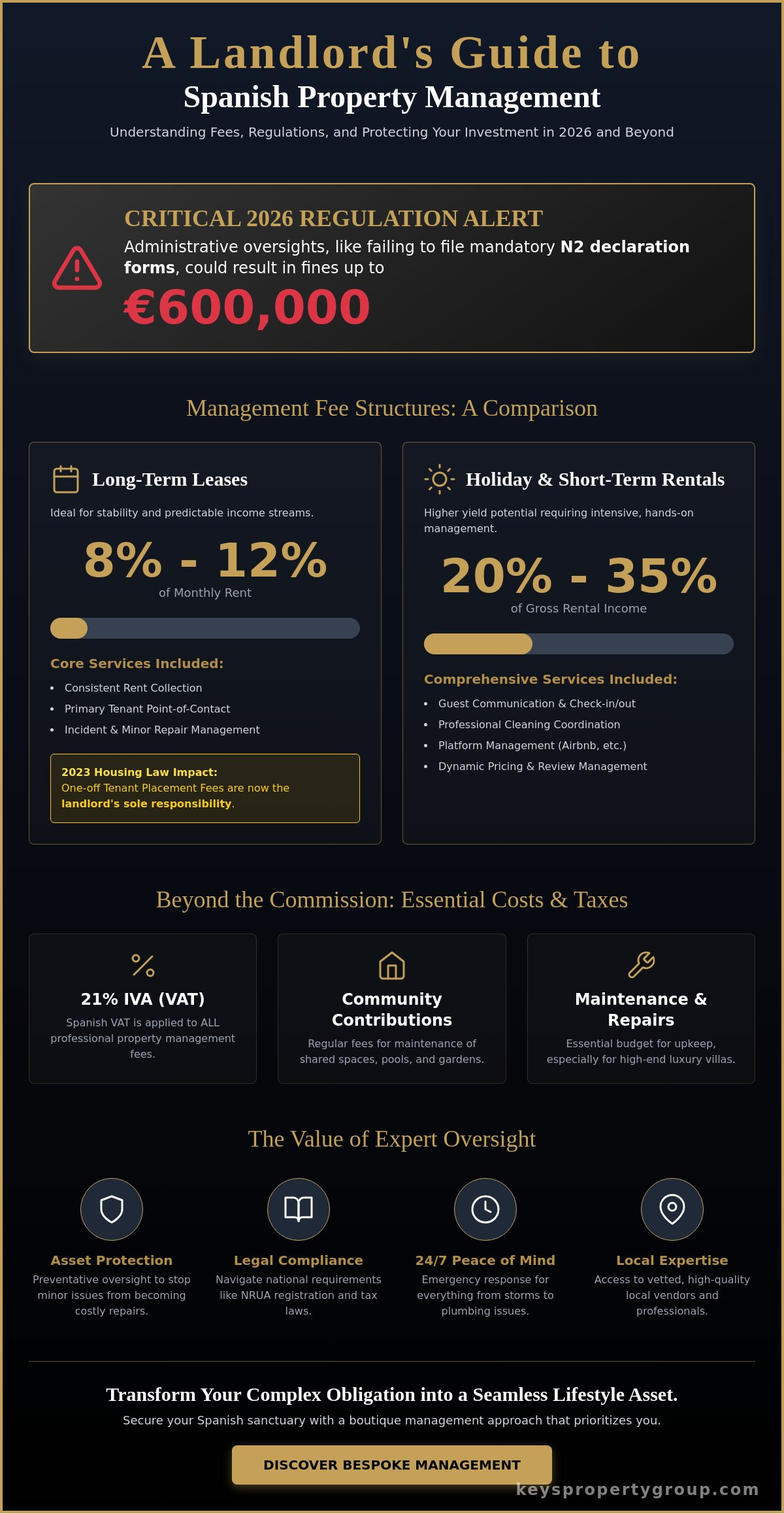
We’ll explore how to balance the 15% to 35% fees typical of short-term holiday rentals with the mandatory N2 declaration forms required by March 2026. This overview offers the clarity you need to navigate regional tax variations and national registration mandates with confidence. By the end of this guide, you’ll possess a clear financial framework to protect your Spanish sanctuary for years to come.
Key Takeaways
- Understand how the average cost of property management in Spain shifts from 5% for long-term stability to 35% for high-yield holiday rental strategies.
- Master the implications of the 2023 Housing Law to ensure your investment remains compliant while protecting your bottom line from unexpected regulatory fees.
- Uncover the hidden ownership costs beyond management fees, from community contributions to the specific maintenance budgets required for luxury villas.
- Learn to leverage tax efficiencies and professional reporting to safeguard your assets against the latest 2026 national registry requirements.
- Discover the benefits of a boutique management approach that prioritizes relationship-building and bespoke care for your Spanish sanctuary.
Understanding the Landscape of Property Management in Spain
In the sun-drenched corridors of the Spanish real estate market, the role of a property manager has evolved far beyond simple maintenance. Today, Property management serves as a comprehensive lifestyle concierge for discerning international owners. It’s the essential bridge between your investment and the complex administrative landscape of the Mediterranean.
Choosing to engage a professional is a strategic decision to preserve your sanctuary’s value over time. While the average cost of property management in Spain reflects a percentage of your yield, it functions primarily as a protective shield for your high-value assets. This investment ensures that your villa or penthouse remains a source of joy rather than a burden of bureaucracy.
Local expertise is non-negotiable when navigating Spain’s specific national requirements, such as the mandatory NRUA registration numbers for 2026. A seasoned advisor handles these intricate details, allowing you to enjoy the prestige of ownership without the stress of local red tape. It’s about securing your legacy with sophisticated, hands-on care that respects both your time and your capital.
Why Professional Management is an Essential Investment
Preventative oversight is the hallmark of a wise investor. Small leaks or electrical flickers can transform into costly structural repairs if left unmonitored during your absence. A trusted representative acts as your local eyes and ears, ensuring every corner of your property remains pristine.
Beyond physical upkeep, your manager serves as a vital liaison for legal and utility matters. They provide a 24/7 emergency response that offers unparalleled peace of mind. Knowing that a dedicated expert is ready to handle a midnight storm or a sudden plumbing issue makes all the difference for your security.
The Spectrum of Management Services Available
Service tiers in Spain range from basic key holding to bespoke, full-scale rental management. Key holding ensures your property is accessible for deliveries or inspections while you are away. Premium tiers expand this to include tax-efficient strategies and guest hospitality for those seeking rental returns.
The average cost of property management in Spain often includes the coordination of specialized local vendors. This boutique approach guarantees that your property maintenance is handled by vetted professionals who understand high-end standards. It’s the key to maintaining an elite standard of living in your Spanish home while your asset continues to appreciate.
Standard Fee Structures for Long-Term and Holiday Rentals
Most professional agencies in the Spanish market operate on a commission-based model, aligning their success directly with your rental yields. When calculating the average cost of property management in Spain, it’s essential to remember that all professional fees are subject to 21% IVA (Spanish VAT). This tax is a standard addition to the base percentage agreed upon in your management contract.
The distinction between long-term stability and high-turnover seasonal rentals creates a significant variance in pricing structures. While long-term leases offer predictable cash flow, holiday rentals require a far more intensive, hands-on commitment from your management team. This labor disparity is the primary driver behind the different commission tiers you’ll encounter across the regions.
Monthly Management Rates for Long-Term Leases
For a standard “Larga Temporada” lease, the average cost of property management in Spain typically ranges from 8% to 12% of the monthly rent. This fee covers the essential pillars of asset care, including consistent rent collection and acting as the primary point of contact for tenant relations. Your manager ensures that minor incidents are resolved swiftly before they escalate into significant financial burdens.
In addition to the monthly percentage, most boutique agencies charge a one-off “Tenant Placement Fee” for the initial lease setup. This fee compensates for the rigorous vetting process, professional viewings, and contract preparation required to secure a reliable occupant for your sanctuary. Under the 2023 Housing Law, these placement costs are now the sole responsibility of the landlord for residential leases.
Commission Models for Short-Term and Seasonal Rentals
Short-term holiday management commands a higher premium, often scaling between 20% and 30% of gross rental income. This increased rate reflects the sophisticated logistics involved in managing a rotating door of international guests. From coordinating professional cleaning teams to facilitating seamless check-ins at late hours, the workload is significantly more demanding than a standard lease.
The final percentage often hinges on the level of administrative support provided, such as platform management on sites like Airbnb or Booking.com. Managers handle the delicate art of guest communication, review management, and dynamic pricing to maximize your investment’s performance. If you’re looking to elevate your property’s appeal, integrating Property Maintenance into your management plan ensures your home remains in guest-ready condition throughout the peak season.
Marketing costs and specialized photography are sometimes bundled into these higher commissions, though some firms may bill them as separate setup expenses. It’s a comprehensive service designed to provide a truly passive income stream while your asset is expertly curated. This allows you to enjoy the rewards of the Spanish tourism market without the daily operational stress.
Beyond the Management Fee: Additional Ownership Costs
Owning a Mediterranean sanctuary involves more than just management commissions. While the average cost of property management in Spain covers the active oversight of your asset, several fixed ownership costs remain a constant factor in your annual budget. These expenses exist whether your property is a high-yield rental or a private retreat for your family’s personal enjoyment.
Professional managers provide an invaluable service by coordinating these payments on your behalf. They prevent the accumulation of late fees or legal penalties that can arise from missing a localized tax deadline or community assessment. Having a well-connected expert handle these administrative burdens ensures your investment remains in good standing with local authorities and homeowners’ associations.
Most boutique agencies recommend maintaining a maintenance float of approximately €500 to €1,000 held in a dedicated account. This fund allows your representative to address minor repairs or emergency call-outs instantly without disrupting your schedule. It’s a proactive approach that ensures small issues don’t escalate into significant structural problems while you are away.
Community Fees and Mandatory Property Taxes
Apartments and penthouses in Spain typically belong to a “Comunidad de Propietarios,” which manages shared infrastructure like pools and lush gardens. These fees often range from €50 to €150 per month, though luxury villas with extensive private amenities may require higher bespoke budgets. Your manager tracks these payments to ensure you never lose access to essential resort-style facilities.
Annual property taxes, known as IBI (Impuesto sobre Bienes Inmuebles), generally fall between €300 and €800 for most residential homes. Non-resident owners must also account for the IRNR (Non-Resident Income Tax), which is currently taxed at 24% for those living outside the EU. A sophisticated management strategy includes tracking these obligations to protect your asset from potential government liens or fines.
Technical Maintenance and Key Holding Services
If you prefer to keep your property for private use, a dedicated Key Holding service is a sophisticated and cost-effective alternative to full rental management. For a modest monthly retainer, your manager performs regular inspections to verify your home remains secure and well-ventilated. This service bridges the gap for owners who don’t need tenant management but desire total peace of mind.
This tier of service includes mail collection and the coordination of emergency repairs through a curated network of trusted local tradespeople. By leveraging their established relationships, managers ensure you receive fair pricing and high-quality workmanship from vetted electricians and plumbers. It’s the ultimate way to ensure your sanctuary is prepared for your arrival, with every detail polished to your exact standards.
Navigating Regulations and Tax Efficiency in Spain
Maintaining a prestigious portfolio in Spain requires more than just an eye for aesthetic design; it demands a rigorous understanding of a shifting legislative tide. The 2023 Housing Law, or Ley de Vivienda, has fundamentally altered the financial obligations of property owners across the peninsula. These changes have made the role of a sophisticated advisor more critical than ever for protecting your capital.
One of the most significant shifts is the mandatory transfer of tenant-finding fees from the renter to the landlord for long-term residential leases. This change means that when calculating the average cost of property management in Spain, you must now budget for the equivalent of one month’s rent as a setup cost for every new long-term tenant. It’s a direct cost of doing business that requires careful yield management.
Beyond these immediate costs, the regulatory environment for 2026 introduces mandatory national registration numbers and stricter reporting windows. Failing to file the new N2 declaration form between February 1st and March 2nd, 2026, could jeopardize your rental license. In certain high-demand areas, penalties for non-compliance can reach a staggering €600,000, making professional oversight a vital insurance policy.
The Impact of the Ley de Vivienda on Landlord Costs
The Ley de Vivienda mandates that landlords are now legally responsible for agency fees on all long-term residential contracts. This shift directly impacts your initial ROI, making professional vetting essential to avoid costly turnovers. With local caps on rent increases in various areas, choosing a reliable tenant is the key to long-term financial stability in your Spanish home.
Drafting a contract that balances your rights with the new protections afforded to tenants is a delicate art. Professional managers collaborate with legal experts to ensure your lease remains compliant with local regulatory nuances across different administrative divisions. This proactive legal shielding is a core component of a boutique management service that prioritizes your peace of mind.
Tax Deductibility of Professional Management Fees
For EU residents, the average cost of property management in Spain is generally a tax-deductible expense against your rental income. This deduction significantly softens the 24% tax rate typically applied to non-resident earnings. Non-EU residents face a different landscape, making meticulous record-keeping and professional Legal assistance an essential part of your management strategy.
Meticulous record-keeping is your best defense against administrative scrutiny from the Spanish tax authorities. Ensure your manager provides detailed invoices for every € spent on maintenance, administration, or cleaning services. These documents are the keys to unlocking tax efficiencies that keep your Mediterranean sanctuary profitable and secure for years to come.
Elevating Your Investment with Bespoke Management Solutions
Choosing a partner for your Spanish estate is a decision that transcends simple arithmetic. While the average cost of property management in Spain provides a baseline for budgeting, the true value lies in the seamless preservation of your asset’s prestige. At KEYS property group, we believe that your home should remain an effortless sanctuary, unburdened by the complexities of daily operations.
Our philosophy centers on a boutique approach where relationship-building is as vital as technical expertise. We don’t just manage buildings; we curate experiences for owners who demand an unparalleled level of service. This commitment ensures that every villa, penthouse, or apartment under our care reflects the high standards of its discerning owner.
The Boutique Approach to Asset Preservation
Personalized care is the cornerstone of effective asset preservation in the luxury market. Our team leverages over 20 years of local experience to provide bespoke Property Maintenance and Key Holding solutions. We act as your trusted advisor, ensuring that every detail is handled with the precision and integrity your investment deserves.
This deep local expertise allows us to anticipate needs before they become issues, protecting your home’s long-term appreciation. By maintaining a curated network of elite service providers, we guarantee that your sanctuary remains in peak condition year-round. It’s the difference between a standard transaction and a life-changing partnership.
Securing Your Spanish Sanctuary for the Future
Expert management is a strategic investment in your future lifestyle. By delegating the logistics to seasoned professionals, you’re free to focus on the sensory experiences that make Spain so alluring. Whether you’re exploring the cultural heart of the Costa del Sol or discovering things to do in malaga city spain, your home remains secure and ready for your return.
The average cost of property management in Spain is a small price for the absolute peace of mind that comes with global standards and local roots. We invite you to begin your journey toward effortless ownership with a tailored management proposal designed specifically for your unique portfolio. Let us provide the key to your new life of Mediterranean luxury.
Unlocking the Future of Your Spanish Investment
Navigating the shifting landscape of 2026 requires more than just a spreadsheet; it demands a partner who understands that the average cost of property management in Spain is an investment in your asset’s longevity. From mastering the nuances of the 2023 Housing Law to ensuring your N2 declarations are filed by the March 2, 2026 deadline, professional oversight is the ultimate safeguard for your capital.
With over 20 years of local expertise, KEYS property group provides the comprehensive end-to-end support necessary to transform complex legal and maintenance hurdles into a seamless ownership experience. Our boutique approach ensures that your luxury villa or penthouse receives specialized care that honors its status as a private sanctuary.
It’s time to transition from the stress of administrative logistics to the joy of the Mediterranean lifestyle. Discover the key to seamless property management in Spain with KEYS property group and let us curate the future of your investment. Your sanctuary is ready for its next chapter of unparalleled growth.
Frequently Asked Questions
How much do property management companies in Spain charge for long-term rentals?
Most professional agencies charge between 5% and 12% of the monthly rental income for long-term leases. This fee typically covers rent collection, tenant communication, and basic maintenance coordination for your sanctuary. It’s important to remember that these quotes usually exclude the 21% IVA (Spanish VAT).
Is it worth hiring a property manager for a holiday home in Spain?
Engaging a professional is essential for navigating the rigorous 2026 short-term rental mandates. Managers handle the intensive guest turnover and the mandatory N2 reporting required between February 1st and March 2nd each year. This expertise ensures your holiday investment remains compliant and provides a truly seamless lifestyle.
Can property management fees be deducted from my Spanish taxes?
EU residents can generally deduct management fees as a professional expense against their rental income tax. For non-residents, the current flat tax rate on rental earnings is 24% as of 2026. This deduction makes the average cost of property management in Spain a tax-efficient investment for European property owners.
What is the difference between key holding and full property management?
Key holding is a boutique service focused on security, mail collection, and regular property inspections while you’re away. Full property management is a more comprehensive tier that includes active rental oversight, guest hospitality, and administrative reporting. The choice depends on whether you seek a private retreat or a high-yield investment.
How has the Spanish Housing Law affected management costs for landlords?
The 2023 Ley de Vivienda shifted the responsibility for agency tenant-finding fees entirely from the renter to the landlord. You should now budget for a one-off expense equivalent to one month’s rent for every new long-term residential contract. This legislative change has fundamentally reshaped the initial setup costs for property owners in Spain.
What additional costs should I expect besides the monthly management fee?
Fixed annual costs include property tax (IBI) ranging from €300 to €800 and waste collection fees between €80 and €250. You should also account for community fees, which typically average €50 to €150 per month for standard apartments. These expenses are vital for maintaining the shared infrastructure and prestigious standing of your residence.
How do I choose the right property management agency for a luxury villa?
Prioritize a boutique agency that offers personalized hospitality and has deep local roots in the Spanish market. A trusted advisor should demonstrate a commitment to asset preservation and provide a sophisticated, end-to-end service. Look for firms that treat your property as a high-value sanctuary rather than a mere financial transaction.
Is VAT included in the quoted management fees in Spain?
Professional management quotes in Spain almost always exclude the mandatory 21% IVA. You must add this Value Added Tax to the base percentage or fixed fee provided by your agency. Transparent firms will clearly outline these net costs to ensure you have a precise financial framework for your budget.
Properties in The Average Cost of Property Management in Spain: A 2026 Investor’s Guide