
How to Secure Your Holiday Villa in Spain: The 2026 Owner’s Guide
What if the very sanctuary you built for relaxation became a source of constant, low-simmering anxiety while you were thousands of miles away? For many owners, the dream of a Mediterranean retreat is often shadowed by concerns over “Okupas” or the fear of a silent water leak going unnoticed. Understanding how to secure your holiday villa in Spain is no longer just about locking the doors; it’s about implementing a sophisticated, multi-layered defense.
We understand that your property is more than just an asset; it’s a hard-earned lifestyle transition that deserves the highest level of care. You’ll discover the professional strategies and sophisticated technologies required to protect your Spanish property investment and ensure total peace of mind while abroad. This approach blends the prestige of high-end security with the grounded reliability of local expertise.
This guide provides a clear roadmap through the Ley Orgánica 1/2025 and the latest 2026 security trends. We’ll explore how a blend of smart monitoring, legal protections, and reliable local management creates an impenetrable shield for your home. By the end, you’ll have a comprehensive plan to keep your investment safe and serene.
Key Takeaways
- Understand why the expansive, private nature of a villa requires a more bespoke security strategy than communal apartments or townhouses.
- Discover the most effective professional strategies for how to secure your holiday villa in Spain using a blend of physical fortification and digital vigilance.
- Gain a clear understanding of the 2026 legal reforms that empower owners to protect their investments with greater speed and certainty.
- Identify the crucial role that professional key holding and property maintenance play in maintaining a secure, lived-in presence throughout the year.
Understanding the Security Landscape for Spanish Holiday Villas in 2026
Owning a high-end villa in Spain is a dream realized, yet the tranquility of a Mediterranean lifestyle requires a modern approach to protection. In 2026, the challenges facing second-home owners have shifted from simple petty theft to more complex risks involving long-term vacancy and sophisticated entry methods. Understanding how to secure your holiday villa in Spain begins with recognizing that your property is a prestigious asset that demands a proactive, integrated defense strategy.
Unlike apartments or townhouses nestled within bustling gated communities, independent villas often offer the very thing we crave: seclusion. This privacy, while luxurious, creates a unique vulnerability by providing potential intruders with the cover of silence and distance from neighbors. It’s no longer enough to rely on traditional methods; owners must transition from simple locks to an integrated ecosystem of security.
We believe that true peace of mind comes from a sophisticated mindset that anticipates risks before they manifest. Modern security is an active presence that combines physical barriers with real-time digital intelligence and a trusted human network on the ground. This ensures your Spanish sanctuary remains a place of joy rather than a source of international concern.
The Evolution of Property Risks in Spain
The landscape of property risk has matured significantly over the last few years. While traditional burglary remains a concern, the primary anxiety for many international owners revolves around the social and legal complexities of Squatting laws in Spain. The introduction of the Ley Orgánica 1/2025 has provided new tools for recovery, yet prevention remains the most effective strategy for high-end homes.
Recent remote working trends mean that many residential areas are now active year-round, yet luxury villa enclaves often remain quiet during the winter months. This seasonal ebb and flow creates windows of opportunity that require a specialized approach to monitoring. A property that appears dormant for months is naturally more attractive to those looking for an easy target.
Why a Multi-Tiered Approach is Mandatory
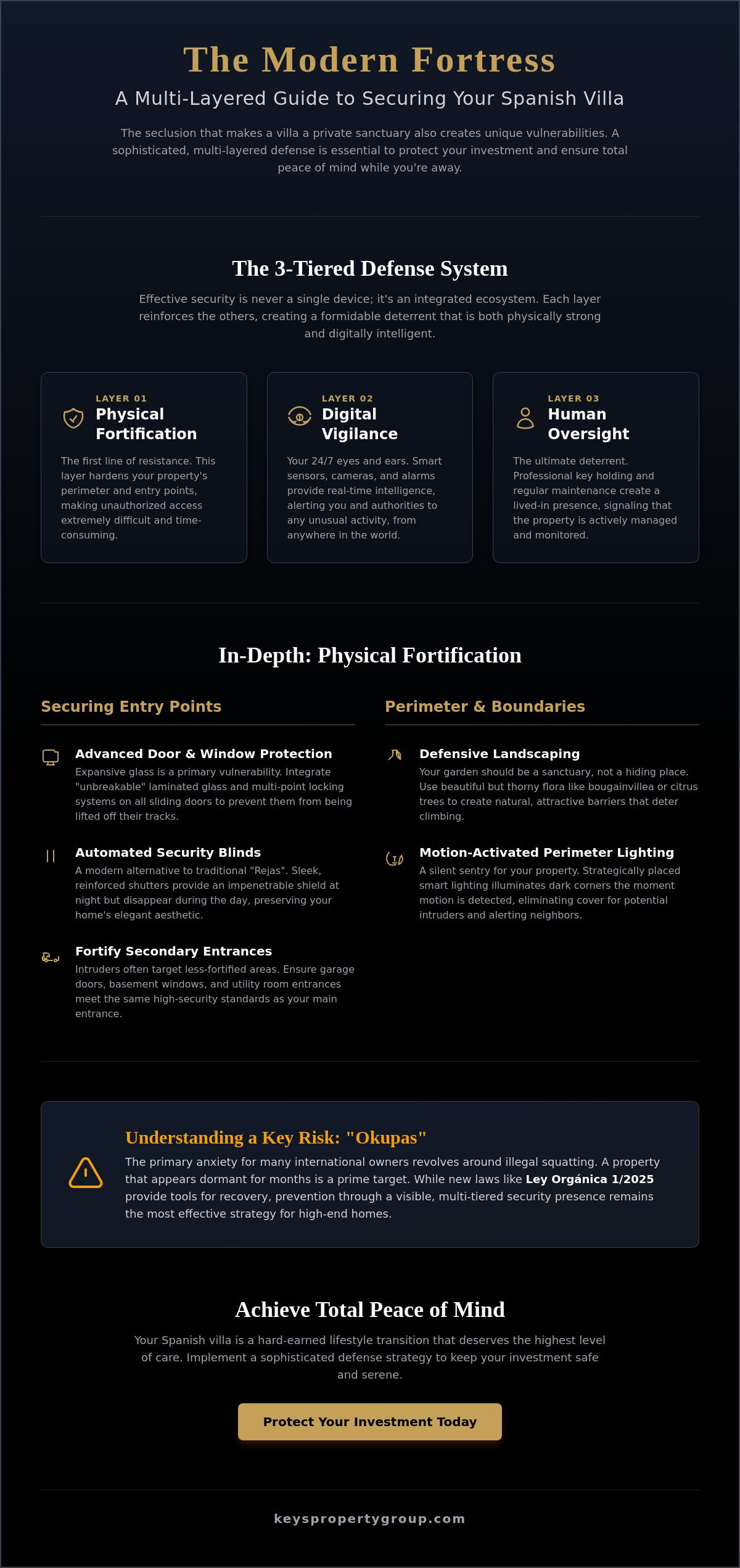
Effective security is never about a single device; it’s about building layers that work in harmony. A multi-tiered strategy integrates physical fortification, digital monitoring, and professional human oversight to transform your home into a “hard target.” When these tiers interact, they create a deterrent that is both visible and technologically advanced.
Physical barriers like reinforced locks provide the first line of resistance, while smart sensors offer the digital eyes needed for remote vigilance from anywhere in the world. However, the most critical layer is often the human element. Professional key holding and property maintenance ensure that your villa looks lived-in and cared for, which is the ultimate deterrent.
By combining these elements, you master the art of how to secure your holiday villa in Spain without sacrificing the inviting warmth of a vacation home. This holistic approach ensures that you can enjoy your time abroad with the absolute confidence that your investment is being watched over by experts who share your high standards.
Physical Fortification: Securing Entry Points and Perimeter Boundaries
A villa’s architectural beauty often lies in its openness, yet those expansive sliding glass doors represent a primary vulnerability. Understanding how to secure your holiday villa in Spain begins with reinforcing these transparent boundaries without compromising your Mediterranean views.
While the UK government safety advice for Spain highlights the importance of basic vigilance, luxury owners require more robust physical barriers. Integrating “unbreakable” laminated glass is a sophisticated choice that offers resistance equivalent to solid walls while maintaining your villa’s aesthetic appeal.
Advanced Door and Window Protection
Multi-point locking systems are essential for patio doors, securing the frame at several intervals rather than a single latch. These systems make it nearly impossible to lift the door off its tracks, which is a common tactic for unauthorized entry.
While traditional “Rejas” offer a classic Spanish charm, many owners now prefer modern automated security blinds. These sleek, reinforced shutters provide an impenetrable shield at night and disappear completely during the day, preserving your home’s elegant silhouette.
Don’t overlook secondary entry points like garage doors or utility rooms, as these are often less fortified than the main entrance. Ensuring these areas share the same high-security standards is a critical step in how to secure your holiday villa in Spain.
Perimeter Security and Landscaping
Your garden should be a sanctuary, not a hiding spot for intruders. Defensive landscaping uses beautiful but thorny flora, like bougainvillea or citrus trees, to create natural boundaries that deter climbing without sacrificing curb appeal.
Motion-activated perimeter lighting acts as a silent sentry, illuminating quiet corners the moment movement is detected. Strategic placement ensures that any approach is bathed in light, removing the cloak of darkness that unwanted visitors rely on.
A secure gate system with an integrated high-definition intercom allows you to vet visitors before they ever reach your front door. This first line of defense establishes a clear boundary for your private estate and provides an immediate sense of control.
If you’re concerned about maintaining these physical defenses while you’re away, our professional property maintenance services ensure every lock and light remains in perfect working order. Keeping the exterior pristine and fortified is the most elegant way to signal that your home is constantly cared for and watched.
Digital Vigilance and Creating the Illusion of an Occupied Home
Digital vigilance is the invisible layer of protection that bridges the gap between your physical absence and a constant, watchful presence. In 2026, mastering how to secure your holiday villa in Spain requires moving beyond simple locks to embrace a sophisticated digital ecosystem. This intelligence ensures your home remains a private sanctuary while projecting the unmistakable aura of an occupied residence.
A well-protected villa doesn’t just resist entry; it actively deters it by appearing lived-in at all times. High-definition remote monitoring and smart automation are no longer optional extras for the discerning owner. They’re the primary tools used to maintain the sensory experience of a home that is vibrant and attended, even when you’re thousands of miles away.
Smart Automation as a Deterrent
Old-fashioned mechanical light timers are easily identified by experienced intruders who look for predictable patterns. Modern smart home platforms allow you to create randomized lighting and sound schedules that mimic the natural flow of a busy household. You can even synchronize these with automated irrigation systems to ensure your lush gardens signal ongoing property care.
Smart doorbells have become a vital tool for remote visitor management. They allow you to see and speak with anyone at your gate directly from your smartphone, giving the impression that you’re just inside the house. This immediate response is often enough to discourage those who are simply testing the property’s vacancy.
Remote Monitoring and Response
When choosing an alarm system, it’s essential to select a provider with a direct link to a “Central Receptora de Alarmas” (CRA). These professional monitoring centers verify breaches in real-time before alerting the Spanish police. This verification is a critical legal requirement to ensure a rapid and official response to any unauthorized entry.
Your camera system must be high-definition to provide useful evidence, but it also needs to be legally compliant. Spanish privacy laws are strict; cameras must not record public streets or neighboring properties to remain admissible in court. Following the UK Government travel advice for basic security is a wise first step, but professional installation ensures your digital shield is both effective and lawful.
At KEYS property group, we integrate our boutique management approach with your chosen digital systems. We act as the trusted local responders when your monitoring app sends a notification, providing that essential human touch. This synergy between sophisticated tech and local expertise is the most reliable way to understand how to secure your holiday villa in Spain.
Finally, remember that your security hardware is only as strong as the network it sits on. Ensure your villa’s Wi-Fi is encrypted and hidden from public view to prevent digital tampering. A secure network ensures that your cameras and sensors remain your most loyal allies in protecting your Mediterranean investment.
Navigating Squatter Risks and Legal Protection Frameworks in Spain
The fear of “Okupas” often dominates international headlines, but the reality is more manageable with a sophisticated legal strategy. Recent reforms, including the Ley Orgánica 1/2025 in effect since April 2025, have significantly strengthened owners’ rights and accelerated the eviction process. Knowing how to secure your holiday villa in Spain means understanding that time is your most valuable asset during a breach.
While media sensationalism might suggest otherwise, the 2026 legal landscape provides clear, fast-track judicial processes for property recovery. The key is moving beyond passive worry toward an active, documented defense of your Mediterranean sanctuary. This proactive stance ensures your investment remains a source of joy rather than a legal burden.
The Legal Importance of Quick Detection
The “48-hour rule” is the most critical window in Spanish property law. If a break-in is reported within the first 48 hours, police are empowered to remove squatters immediately without a court order. This makes real-time alarm notification and professional oversight indispensable for international owners who cannot be on-site.
Spanish law distinguishes between allanamiento de morada, which involves entry into a residence, and usurpación, which applies to empty buildings. Because a holiday villa is legally considered a residence, it falls under the more serious allanamiento category, allowing for the 15-day express eviction process established in 2026. You should maintain a digital “security folder” containing title deeds and recent utility bills to prove ownership to local authorities instantly.
Proactive Measures for Long-Term Vacancy
A property that appears abandoned is a magnet for legal complications. Overgrown gardens or overflowing mailboxes signal a lack of oversight, which can make it harder to prove the property is an active residence. Maintaining a “lived-in” aesthetic is a strategic legal defense as much as a physical one.
Before leaving for more than 30 days, ensure your pool is clean and all external lights are functioning on randomized schedules. Active occupancy is best achieved through regular professional visits that disrupt any surveillance by potential squatters. This consistent human presence ensures that any unauthorized entry is detected and reported within the critical legal window.
If you need expert guidance on these regulations or require a local representative to act on your behalf, our legal assistance and key holding services provide the professional shield your investment deserves. We ensure your documentation is ready and your property is never truly “vacant” in the eyes of the law.
Professional Key Holding and Maintenance: Your Essential Safety Net
While technology provides the eyes and physical barriers provide the shield, the human element remains the most critical component of a truly secure estate. Relying on a casual “neighbor check” often lacks the accountability and professional expertise required for high-value properties. Professional key holding acts as the linchpin of your strategy, ensuring that every digital alert is met with a swift, expert response.
A professional presence transforms your villa from an unattended asset into a vibrant, managed home that is clearly under constant supervision. This ongoing activity is the ultimate deterrent for both opportunistic criminals and potential squatters who look for signs of neglect. When you consider how to secure your holiday villa in Spain, the integration of local expertise ensures your property is never truly alone.
The Value of Professional Key Holding Services
Having a dedicated team on the ground means having a clear, established protocol for emergency access and alarm response. If your smart system triggers an alert, you need a trusted partner who can verify the situation on-site within the critical legal windows discussed earlier. This immediate verification is essential for working with local authorities and maintaining the integrity of your security perimeter.
Beyond security breaches, professional inspections are vital after the sudden Mediterranean storms or power cuts that can occasionally occur. A key holder checks that filtration systems are running and that security cameras haven’t been knocked offline by electrical surges. KEYS property group offers dedicated key holding for asset care, providing a boutique service that treats your home with the prestige and attention it deserves.
Integrating Maintenance with Security
A pristine pool and a perfectly manicured garden are more than just aesthetic choices; they are powerful signals of active ownership. An overgrown lawn or a neglected terrace suggests a property has been forgotten, which unfortunately invites unwanted attention. Seamless property maintenance ensures that your home always projects an image of being occupied, vibrant, and carefully attended.
Your local partner also manages the practicalities that can become security risks if left unchecked, such as utility failures or urgent legal correspondence. This comprehensive oversight allows you to step away from the stress of management and focus on the lifestyle your home was meant to provide. You might even find yourself planning your next visit to explore the vibrant things to do in Malaga city Spain while we handle the intricate details of your home’s safety.
True security is achieved when physical fortification, digital vigilance, and professional human presence work in perfect harmony. By choosing a boutique partner who understands both the local landscape and global standards, you protect your investment with absolute confidence. This is the final, essential step in mastering how to secure your holiday villa in Spain for a worry-free future.
Embracing Peace of Mind in Your Spanish Retreat
Mastering the art of property protection in 2026 is about more than just hardware; it’s about a lifestyle of vigilance and expert partnership. You now understand that a multi-layered approach, combining physical fortification with real-time digital intelligence, is the most effective way to protect your investment.
By staying informed on the latest legal frameworks and maintaining a consistent human presence, you eliminate the vulnerabilities that long-distance ownership can create. This comprehensive strategy ensures that you are always in control of how to secure your holiday villa in Spain, regardless of where you are in the world.
With over 20 years of local expertise, we provide the sophisticated care your estate demands through post-sale property maintenance and dedicated key holding services. Secure your Spanish investment with KEYS property group’s professional management and enjoy the absolute tranquility you deserve.
Your Mediterranean dream should be defined by sun-drenched afternoons and serene evenings, not by distant worries. We are here to ensure that every time you return to your villa, it’s exactly as you left it: a perfect, private sanctuary.
Frequently Asked Questions
What is the “48-hour rule” for squatters in Spain?
The 48-hour rule allows Spanish police to evict squatters immediately without a judicial warrant if the break-in is reported within this specific timeframe. This regulation is a cornerstone of how to secure your holiday villa in Spain effectively. It highlights the absolute necessity of real-time monitoring to catch unauthorized entry the moment it occurs.
Does my Spanish home insurance cover theft if the villa is empty?
Most Spanish policies cover theft, but they often include an “unoccupancy clause” that limits protection if the home is empty for more than 30 consecutive days. You should review your specific policy terms to ensure your coverage remains active during long absences. Professional key holding can often satisfy insurer requirements for regular property inspections.
Are security bars (rejas) mandatory for insurance purposes in Spain?
While not legally mandatory by the state, many insurers in Spain require security bars on ground-floor windows as a condition for theft coverage. If your villa lacks rejas, your provider might increase premiums or even exclude claims resulting from window entry. High-security laminated glass is often accepted as a sophisticated alternative by upscale insurance firms.
How often should a professional key holder visit my villa?
We recommend a minimum of one inspection per week to ensure your villa remains secure and well-maintained. These visits allow a professional to check for signs of tampering, clear away mail, and verify that all systems are functioning perfectly. Regular human presence is the most effective deterrent for those observing the property from afar.
What is the most effective alarm system for a remote Spanish property?
The most effective systems are those connected to a Central Monitoring Station (CRA) with high-definition video verification. This connection is vital because police in Spain generally only respond to verified alarms where a crime is clearly in progress. This integrated technology is a primary component of how to secure your holiday villa in Spain against modern threats.
Can I legally install cameras that record the street outside my villa?
No, you cannot legally record public streets, sidewalks, or neighboring properties under Spanish data protection laws. Cameras must be strictly focused on your own private land to avoid heavy fines from the AEPD. Signs informing visitors of video surveillance must also be clearly displayed at all entry points to remain compliant.
How do I prove a property is my “first” or “second” home to the police?
You can establish residency status by presenting your title deeds, current utility bills, or a local certificate of empadronamiento. It’s wise to keep digital copies of these documents in a secure cloud folder for immediate access. These papers prove the property is an active residence, which grants you higher levels of legal protection during an entry.
What should I do if my alarm goes off while I am in another country?
You should immediately contact your professional key holding partner to conduct a swift on-site verification. If the alarm company confirms a breach via their sensors, they’ll notify the police while your key holder provides physical access for the authorities. This coordinated response ensures the situation is handled professionally without you needing to be in the country.
Properties in How to Secure Your Holiday Villa in Spain: The 2026 Owner’s Guide