
What Does a Spanish Property Survey Cover? A Comprehensive 2026 Guide
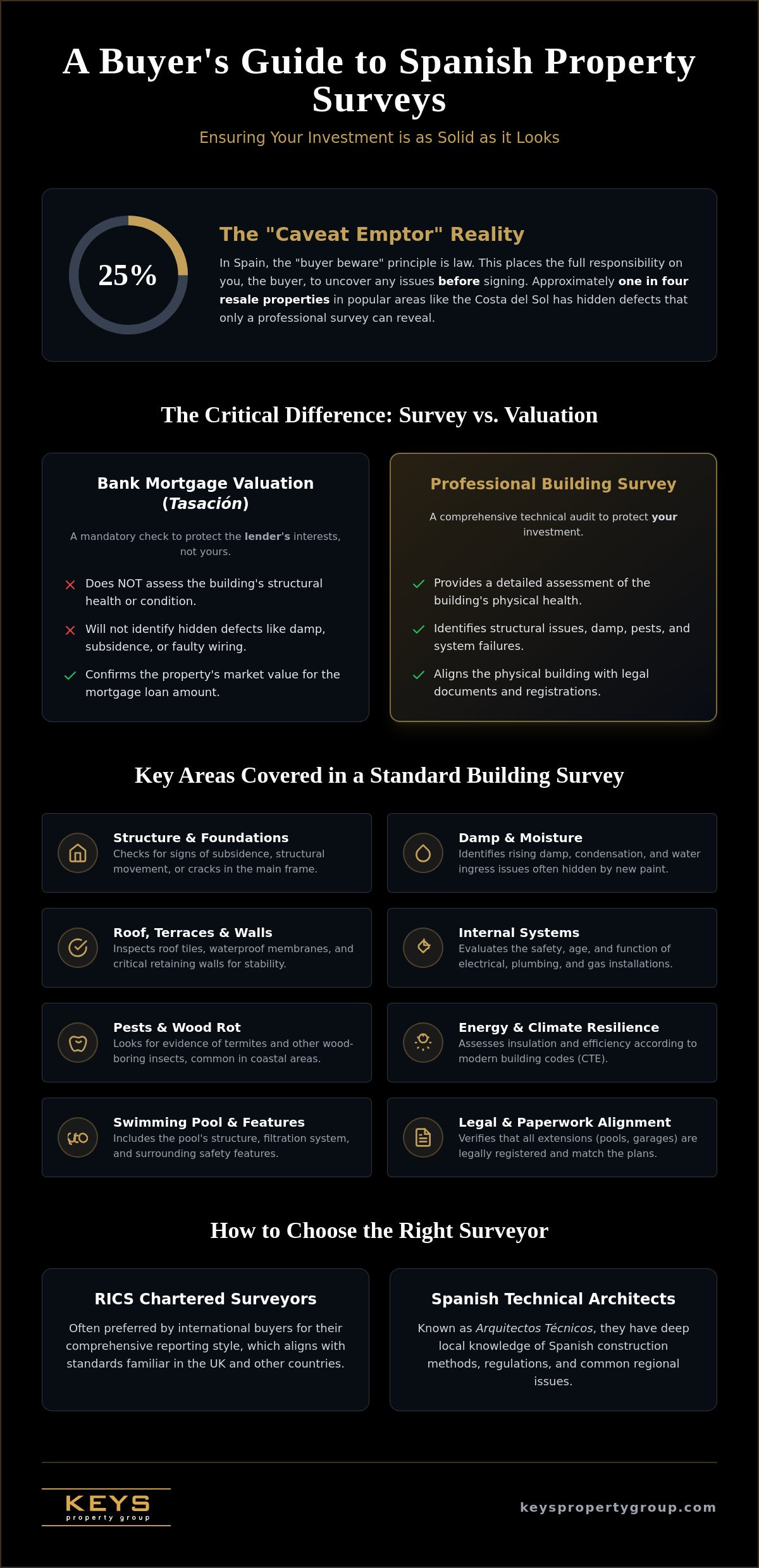
Did you know that approximately one in four resale properties in popular regions like the Costa del Sol contains hidden defects that only a professional inspection would catch? When you’re standing on a sun-drenched terrace, it’s easy to overlook the subtle signs of subsidence or outdated wiring. Understanding what does a Spanish property survey cover is the most effective way to ensure your Mediterranean dream remains a sound investment.
We understand that the Spanish buying process can feel opaque, especially when you’re trying to distinguish between a bank’s mortgage valuation and a true structural assessment. You deserve to sign your contract with absolute confidence, knowing that your new villa or apartment is as solid as it looks. Our goal is to provide the clarity you need to navigate these technical standards with ease.
This comprehensive 2026 guide provides a clear checklist of every technical element inspected during a professional survey. We’ll explore the vital differences between legal and technical due diligence to give you total peace of mind before you commit to a purchase.
Key Takeaways
- Understand why the “Caveat Emptor” principle places the full responsibility for technical due diligence on the buyer in the Spanish market.
- Discover exactly what does a Spanish property survey cover, including vital checks for structural movement, subsidence, and hidden moisture issues.
- Learn how a professional surveyor aligns physical findings with essential paperwork like the Habitation Certificate and Energy Performance Certificate.
- Compare the expertise of RICS Chartered Surveyors and Spanish Technical Architects to select the right specialist for your specific property type.
- Gain a clear strategy for using your survey report to prioritize future maintenance and obtain accurate quotes for any necessary repairs.
Understanding the Role of a Property Survey in the Spanish Buying Process
A Spanish property survey is a comprehensive technical audit of a building’s physical condition. It serves as a professional health check, examining everything from the roof’s integrity to the functionality of the plumbing and electrical systems.
In the Spanish real estate market, the principle of “Caveat Emptor” or “buyer beware” is a cornerstone of the law. This means that once the contract is signed, the responsibility for any existing defects lies with you, the buyer, not the seller.
It’s vital to distinguish between a mandatory mortgage valuation, or tasación, and a voluntary structural survey. The bank’s valuation only protects the lender’s interests by confirming the property’s market value; it doesn’t assess the building’s structural health.
While some local buyers might rely on a simple visual walkthrough, international investors should prioritize a formal inspection. This ensures your investment is protected against the unique challenges of Mediterranean building standards and climate-related wear.
The Difference Between Legal and Physical Due Diligence
Your legal representative manages the paperwork, checking the title and ensuring there are no outstanding debts. However, a surveyor examines the physical reality of the bricks and mortar to ensure they match the legal descriptions.
An expert can identify discrepancies between the Nota Simple and the actual build on the ground. This process is crucial for verifying that all extensions, such as pools or converted garages, are both legally registered and structurally sound.
Understanding the role of a property survey helps you avoid inheriting costly legal or structural headaches. You can learn more about how this fits into the wider property buying process in Spain to ensure every base is covered.
Types of Surveys Available in Spain
Determining what does a Spanish property survey cover often depends on the type of inspection you choose. A General Building Survey is the most common choice, providing a thorough overview of all visible and accessible areas of a home.
For older properties or those with visible signs of distress, a Structural Survey offers a deeper investigation. This focused audit examines the integrity of foundations and load-bearing elements to catch major issues like subsidence before they become your problem.
If you’re purchasing a brand-new home, a Snagging List is the appropriate tool. This inspection identifies cosmetic and functional defects in new-build apartments or villas, ensuring the developer fixes them before the final handover.
Key Areas Covered in a Standard Spanish Building Survey
Understanding exactly what does a Spanish property survey cover is essential for any buyer in 2026. Modern inspections now account for the latest energy efficiency mandates and the Technical Building Code (CTE) standards that evolved significantly after 2006.
A professional surveyor meticulously examines the main frame for signs of subsidence or movement. They use specialized tools to identify rising damp or condensation issues that are often masked by a fresh coat of paint during a sale.
The exterior inspection focuses on the resilience of roof tiles and the condition of waterproof membranes on sun terraces. These elements are vital for protecting the home against the intense Mediterranean climate and seasonal heavy rains.
Surveyors also evaluate the safety and age of electrical, plumbing, and gas installations to ensure they meet current safety protocols. They check internal finishes, including windows and joinery, specifically looking for evidence of termite activity or wood rot which can be prevalent in certain coastal regions.
In 2026, there’s an increased focus on climate resilience. This means your survey will likely include deeper checks on insulation and the overall energy efficiency of the building envelope to ensure long-term comfort and lower utility bills.
Exterior and Structural Elements
In many Spanish hillside developments, retaining walls are critical structural components that require careful examination for stability. A surveyor will also assess the integrity of the swimming pool structure and its filtration system to prevent unexpected and expensive repair costs after you move in.
Your specialist will perform a surveyor’s paperwork check to verify that physical boundary walls align with the legal plot descriptions. This ensures you aren’t inheriting a dispute with a neighbor over a few meters of land or an incorrectly placed fence.
Internal Systems and Comfort
Internal checks include testing for adequate water pressure and ensuring drainage systems are operating efficiently throughout the property. The surveyor also verifies that air conditioning and heating units are fully functional and operating at peak efficiency to manage the Spanish heat.
For older properties, the inspection looks for hazardous materials like asbestos or lead piping which were common in earlier eras of construction. Identifying these early allows you to factor removal costs into your budget before you commit to the purchase.
If you’re looking for a property that already meets the highest modern standards, you might want to browse our latest listings of villas and apartments to find your ideal home. We focus on quality builds that provide peace of mind from day one.
Administrative and Legal Alignment: The Surveyor’s Paperwork Check
A thorough technical inspection goes beyond the physical structure to ensure the property matches its legal identity. When considering what does a Spanish property survey cover, you must include the vital cross-referencing of official documents with the reality on the ground.
The surveyor verifies the Certificado de Eficiencia Energética (Energy Performance Certificate) to ensure the rating accurately reflects the home’s current installations. They also confirm the status of the Cédula de Habitabilidad, which is the essential habitation certificate required to connect utilities and live in the property legally.
Identifying obras no declaradas, or unrecorded building works, is perhaps the most critical part of this administrative check. Finding a terrace that was enclosed or a basement converted into a bedroom without the proper licenses can save you from inheriting significant municipal fines or future legalization costs.
The Importance of the Catastro Alignment
In Spain, it’s common for the square meterage recorded in the Property Registry to differ from the figures held by the Catastro, the office responsible for property taxes. If the physical measurements of the property deviate from the registry by more than 10%, a formal notarial procedure is required to correct the records before a smooth sale can proceed.
Modern surveyors utilize high precision GPS tools to verify plot boundaries and ensure the garden or pool isn’t encroaching on protected land. This prevents the risk of buying “invisible” extensions that exist in reality but have no legal standing on paper, which could complicate your future resale or mortgage applications.
The ITE (Inspección Técnica de Edificios)
The Inspección Técnica de Edificios (ITE) is a mandatory technical inspection for buildings over a certain age, typically 45 to 50 years depending on the regional regulations. Your surveyor will check if the building has a “favourable” ITE report, which indicates that the community of owners is maintaining the communal structural elements to a safe standard.
While a positive ITE report is a good sign, it’s not a substitute for a private building survey. The ITE focuses on general safety and communal areas, whereas a private inspection provides a granular look at the specific unit you’re purchasing. This ensures that internal plumbing, individual structural beams, and private finishes meet your personal standards for quality and safety.
How to Choose the Right Surveyor for Your Spanish Purchase
Selecting the right professional is just as critical as the property itself. While you now know what does a Spanish property survey cover, the person holding the clipboard determines the quality and depth of those technical insights.
Always confirm that your surveyor holds current professional indemnity insurance. This protection is vital, as it secures your interests in the rare event that a major defect is overlooked during the inspection process.
Request a sample report in your native language before making a formal commitment. A technical document is only truly useful if you can fully grasp the implications of the findings without needing a specialized translator.
Most professional surveys take between three to five working days to complete from the date of the site visit. Planning for this timeline ensures you don’t feel rushed during the critical due diligence phase of your transition to Spain.
RICS Chartered Surveyors vs. Local Architects
Many international buyers prefer RICS Chartered Surveyors because they adhere to globally recognized standards and familiar reporting formats. This provides a sense of professional oversight that translates well across borders, offering quiet confidence to those used to UK or US standards.
A local Aparejador, or Technical Architect, offers deep expertise in regional building styles and specific municipal planning files. They are members of local “Colegios” (Official Colleges), which verify their qualifications and ensure they meet strict Spanish professional requirements.
Balancing these two options often depends on the property type you are pursuing. For a complex villa or a historic townhouse, the technical architect’s specialized knowledge of local building codes is often an invaluable asset.
Cost vs. Value in Surveying
Your survey report is more than a checklist; it’s a strategic negotiation tool. If significant repairs are identified, you can often request a price reduction or ask the seller to rectify the issues before you sign the final deed.
The return on investment for a professional survey is effectively infinite when it prevents the purchase of a property with terminal structural failures.
Beyond the technical details of what does a Spanish property survey cover, the report’s true value lies in the clarity it provides for your final decision. If you are ready to move forward with your purchase, we invite you to contact our team for expert guidance on finding the right partners for your journey.
From Survey to Success: Implementing the Findings
Receiving your final report marks the transition from investigation to action. While knowing what does a Spanish property survey cover is vital for your initial due diligence, the true value of the document is realized in how you apply these technical insights to your new lifestyle.
Use the findings to build a tiered priority maintenance list. This allows you to address urgent safety repairs immediately while scheduling cosmetic improvements for a later date, ensuring your budget remains manageable and transparent.
When you’re ready to obtain quotes for repairs, provide local contractors with the specific technical sections of the survey. This ensures that the scope of work is based on an objective assessment of the building’s needs rather than a subjective visual estimate.
Negotiating Repairs or Price Reductions
Presenting survey findings to a seller requires a methodical and professional approach. Focus your negotiation on “deal-breakers” like structural instability, significant damp, or illegal extensions that could lead to future municipal fines.
Minor maintenance items, such as aging roof tiles or worn joinery, are usually considered part of the property’s natural lifecycle. Distinguishing between these categories is a vital part of understanding the property buying process in Spain.
Use the surveyor’s estimated costs as a grounded baseline for your discussions. This data-driven strategy builds immediate trust with the seller and provides a clear path toward a fair price adjustment or a pre-sale repair agreement.
Long-Term Property Care and Maintenance
Your survey serves as a permanent baseline for your home’s physical health. By comparing future inspections against these initial records, you can monitor the effectiveness of your long-term property management strategy and preserve your asset’s value.
For holiday home owners, regular property maintenance and key holding services are essential for peace of mind. Routine checks prevent small issues, such as a minor plumbing leak, from escalating into major structural problems while you’re away from your Mediterranean retreat.
Professional oversight ensures your new home remains a source of joy rather than a source of stress. If you need expert assistance with property management or maintenance post-sale, please contact KEYS property group to discuss how we can support your new lifestyle.
Beyond the technical checklist of what does a Spanish property survey cover, the report provides a strategic roadmap for your home’s future. This professional foresight ensures your transition to the Spanish sun is both smooth and rewarding.
Securing Your Future in the Spanish Sun
Investing in a Mediterranean home is a life-changing milestone that deserves the highest level of protection. By understanding what does a Spanish property survey cover, you transform a potential risk into a calculated and secure lifestyle choice.
A professional survey ensures that your physical villa or apartment perfectly matches its legal description while identifying any hidden structural or technical needs. This clarity allows you to negotiate with confidence and plan your long-term maintenance with total precision.
With over 20 years of local real estate expertise, our team provides the end-to-end legal and maintenance support you need for a seamless transition. We specialize in national property management to ensure your investment remains in peak condition for years to come.
Secure your Spanish investment—Contact our experts today to begin your journey with a partner you can trust. Your dream home is within reach, and we’re here to help you step into it with absolute peace of mind.
Frequently Asked Questions
Is a property survey mandatory when buying in Spain?
No, a property survey is not a legal requirement in the Spanish buying process. It remains the buyer’s responsibility to arrange one independently to perform technical due diligence. Relying solely on a visual inspection is risky because the legal principle of “Caveat Emptor” applies to all real estate transactions.
How much does a building survey typically cost in Spain?
As of July 2026, costs vary based on the property type and the depth of the inspection. A standard villa survey generally ranges from €800 to €1,500, while a visual snagging report for an apartment typically costs between €400 and €700. For large or older properties, a full structural survey can range from €1,500 to over €3,000.
Can I use a survey to negotiate the purchase price?
Yes, you can use the findings as a strategic negotiation tool to request a price reduction or specific repairs. If the report identifies significant defects that weren’t disclosed, it provides an objective basis for adjusting the final sale price. This ensures you don’t inherit unexpected financial burdens immediately after the purchase.
What is the difference between a valuation and a survey?
A bank valuation, or tasación, is a mandatory check to confirm the property’s market value for mortgage purposes. In contrast, understanding what does a Spanish property survey cover involves focusing on the physical health of the building. The survey protects your personal investment, while the valuation primarily protects the lender’s interests.
Will the surveyor check for illegal building works?
Yes, a professional surveyor will cross-reference the physical property against the official Catastro and Land Registry records. They identify “obras no declaradas,” such as unrecorded pool extensions or enclosed terraces. This allows your lawyer to advise on the legal risks and potential costs of regularizing these additions before you commit.
How long does it take to get a property survey report in Spain?
You can typically expect to receive the final written report within three to five working days after the site visit. While the physical inspection may take several hours, the surveyor needs time to analyze the data and cross-reference documents. Planning for this window ensures you meet your contractual deadlines for due diligence.
Do I need a survey for a brand new apartment?
Yes, a specialized inspection known as a snagging list is essential for new-build properties. This check identifies cosmetic defects, poor finishes, or functional failures that the developer must rectify before you sign the final deed. It ensures the apartment meets the agreed standards and avoids post-handover disputes with the construction firm.
What happens if the survey reveals major structural issues?
If major issues like subsidence or terminal damp are discovered, you have several options before signing the contract. You may choose to withdraw from the purchase entirely or negotiate for the seller to complete structural repairs at their expense. This professional foresight prevents you from committing to a property that could become a significant liability.
Properties in What Does a Spanish Property Survey Cover? A Comprehensive 2026 Guide