
Understanding the Nota Simple in Spain: A 2026 Buyer’s Guide
Imagine finding your perfect coastal retreat, only to realize months later that you’ve inherited a stranger’s unpaid tax bill. In the Spanish property market, debts often follow the land rather than the person, making due diligence your most vital asset.
You’ve likely spent months dreaming of this transition, and the last thing you want is for legal jargon to cloud your excitement. Understanding the Nota Simple in Spain is the most effective way to ensure your investment is protected and your future home is truly yours.
We’re here to provide the professional assurance you need for a secure and transparent purchase. This guide will walk you through the specifics of this digital “DNA” of your property, ensuring every boundary and lien is crystal clear before you sign.
You’ll discover how to easily obtain this document online for €9.02 and what specific details you must verify to guarantee a smooth mortgage process. Let’s master the essentials together so you can focus on the lifestyle that awaits you.
Key Takeaways
- Learn how the Nota Simple acts as a vital legal safeguard, protecting your investment from hidden liabilities and inherited debts.
- Verify ownership structures and precise physical boundaries to ensure your future home aligns perfectly with its official registration.
- Master the process of understanding the Nota Simple in Spain by learning how to request this essential document through the Land Registry.
- Identify the specific identification numbers and owner details needed to receive an accurate property report within a matter of hours.
- Understand the importance of professional legal assistance in interpreting complex terminology for a seamless mortgage and purchase experience.
The Nota Simple: An Essential Foundation for Spanish Property
Securing a dream home in the Mediterranean sun begins with a single, unassuming document. Understanding the Nota Simple in Spain is the first step every discerning investor takes to ensure their path to ownership is clear and protected.
This document serves as the official summary from the Spanish Land Registry. It acts as a transparent window into the legal reality of a property, providing peace of mind before any financial commitments are made.
Savvy international buyers recognize that this isn’t just paperwork. It’s a strategic tool that validates the integrity of their investment from the very beginning of the journey.
What Exactly is a Nota Simple?
At its core, a Nota Simple is a non-certified extract from the local Registro de la Propiedad. While it isn’t a permanent certificate, it remains the gold standard for due diligence in modern Spanish real estate transactions.
Many global Land Registration Systems rely on similar public records to maintain order and trust. In Spain, this document provides a concise legal snapshot that confirms who truly owns the land and what they are permitted to do with it.
The report is designed to be purely informative. It offers a standardized way for buyers to verify that an Apartment or Villa is free from unexpected legal complications or zoning restrictions.
Expect the report to provide a high-level overview of several critical factors. These typically include:
- Current registered owners and their share of the property.
- A brief description of the property’s physical characteristics.
- Any existing mortgages, liens, or legal embargoes attached to the land.
- Specific classification of the land, such as urban or rustic.
The Legal Nature of the Report
It’s vital to distinguish the Nota Simple from the Escritura, or Title Deeds. While the deeds are the formal contract of sale, the Nota Simple is often more current and reflects the most recent filings at the registry office.
By 2026, the Spanish government has prioritized digital registry synchronization to ensure data is updated almost instantly. This means your report will show the most accurate, real-time status of the property’s legal standing today.
Savvy buyers prioritize this report because it reveals the “living” history of the home. It ensures that the person selling the property has the legal right to do so and that no hidden surprises are waiting in the wings.
Understanding the Nota Simple in Spain allows you to move forward with the quiet confidence of a seasoned expert. It transforms a complex legal landscape into a manageable, transparent process that prioritizes your security as a buyer.
This document is the bridge between a beautiful listing and a secure, legally sound acquisition. It ensures that your transition to a new lifestyle is built on a foundation of facts rather than assumptions.
Decoding the Critical Information in Your Property Report
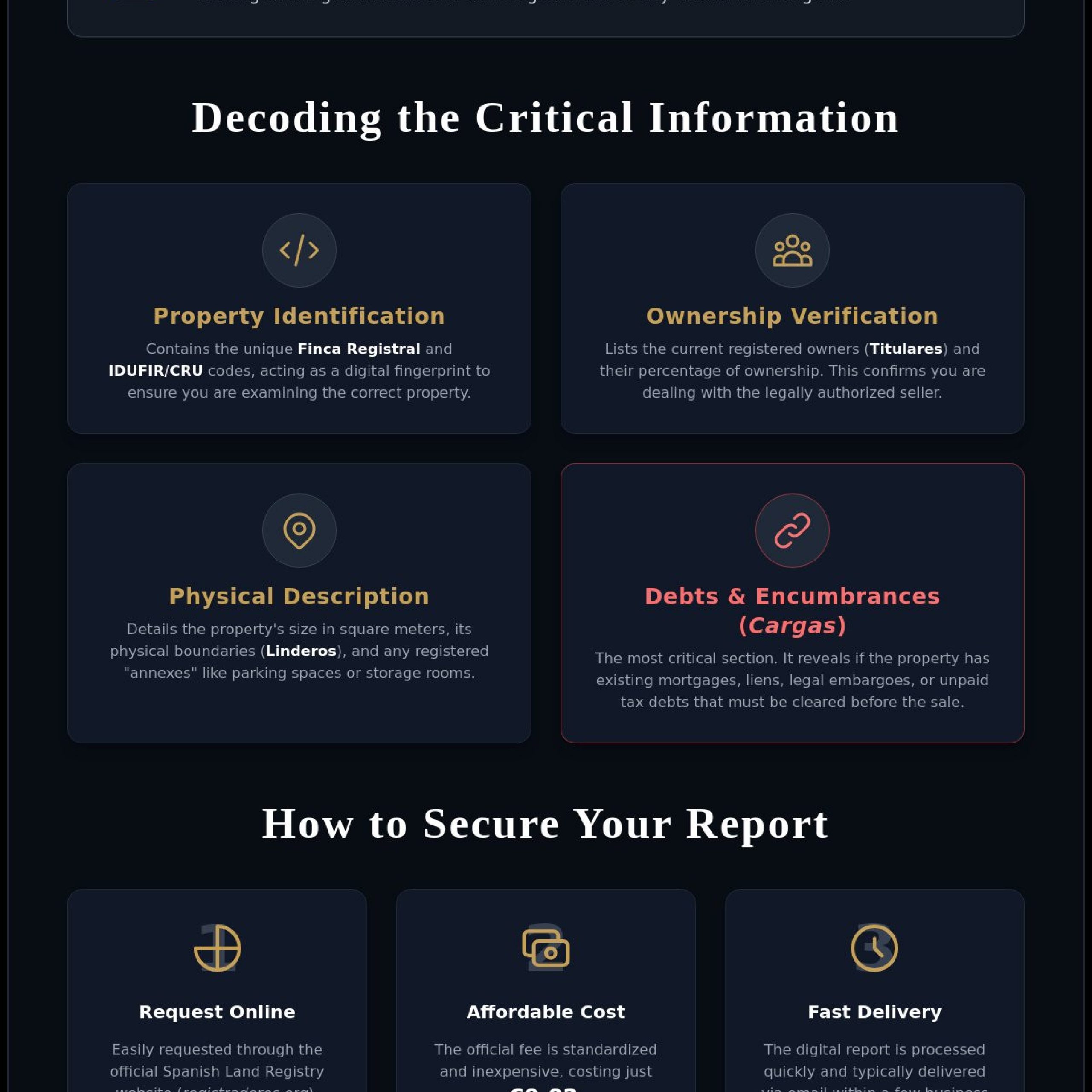
Every property in Spain is assigned a unique identity through its Finca number and the IDUFIR (or CRU) code. These digits are the key to understanding the Nota Simple in Spain, acting as a digital fingerprint that ensures you’re looking at the correct plot of land.
This section of the report also details the land’s classification. It’s vital to know if a plot is designated as urbano for residential use or rústico for agricultural purposes, as this significantly impacts your renovation or building rights.
The document provides the high-level clarity needed to move forward with a purchase. It ensures that every detail, from the unique registry code to the legal land use, aligns with your investment goals.
Ownership and Description Details
It’s essential to verify that the registered owner’s name matches the person listed on the sales contract. If the property is owned by a company or multiple heirs, the report will specify the exact percentage of shares each party holds.
Check the physical description carefully for “annexes” such as private parking spaces or storage rooms. These are often registered as separate entities, and failing to include them in the report could mean they aren’t legally part of your purchase.
Boundaries are also meticulously recorded to prevent future disputes with neighbors. If you’re looking at specific Villas or Plots, comparing these registered boundaries with the physical fence lines is a critical step in your due diligence.
The square meters listed in the Registry may sometimes differ from the Catastro (tax office) records. A seasoned expert can help you reconcile these figures to ensure you’re paying for the actual size of the home.
Identifying Encumbrances and Debts
This is where the document reveals its true value by listing any “cargas” or encumbrances. You’ll see active mortgages, which must be canceled at the notary, and “embargos,” which are court-ordered seizures resulting from unpaid debts.
You must also look for “afecciones fiscales.” These are potential tax liabilities that remain attached to the property for five years after a transfer, meaning you could be held responsible for the previous owner’s unpaid taxes.
Before you commit to a purchase, you can get a Nota Simple to see these details clearly. It’s the most reliable way to ensure you aren’t inheriting someone else’s financial burdens.
The report also notes “easements,” such as a neighbor’s right to cross the land or utility company access. Identifying these early prevents surprises that could affect your privacy or future landscaping plans.
If you’re unsure about the technical language in your report, our team provides expert legal assistance to help you interpret every clause with confidence.
Why the Nota Simple is Your Best Defense in Real Estate
In the Spanish property buying process, the Nota Simple acts as your primary legal shield. It’s the ultimate tool for risk mitigation, ensuring that your capital remains secure throughout every stage of the transaction.
One of the most significant risks in Spain is the “inheritance” of a previous owner’s debts. Because certain liabilities attach to the land itself, understanding the Nota Simple in Spain is essential to avoid paying someone else’s unpaid community fees or local taxes. This level of transparency is vital for international buyers who may be unfamiliar with local tax structures.
This document bridges the gap between eager investors and local sellers. It provides a transparent, verifiable record that removes the guesswork from negotiations, allowing you to move forward with professional assurance.
Protecting Your Capital Investment
Beyond basic ownership, the report can uncover hidden urbanistic infractions. If a previous owner added a terrace or a pool without the correct permits, the registry entry will often reflect these legal discrepancies. These issues can lead to heavy fines or complications when you eventually decide to sell the property yourself.
To request a report for a property you don’t yet own, you must demonstrate a “legitimate interest,” such as being a prospective buyer. Most requests are processed through the Spanish Land Registry (Colegio de Registradores). This official channel provides a verified paper trail that protects both the buyer’s privacy and the seller’s data integrity.
Always ensure your report is current. While it doesn’t have a formal expiration date, we recommend using a document that is no more than three months old. This timeframe ensures that no new charges, such as recent tax seizures, have been filed against the property in the weeks leading up to your purchase.
Facilitating Mortgage and Legal Approval
If you’re seeking financing, a fresh Nota Simple is non-negotiable. Spanish banks require a version issued within the last 30 to 90 days to proceed with a formal property appraisal. Without this document, the bank cannot verify the collateral value of the home, effectively halting your application process.
The Notary also plays a crucial role by reviewing the registry status immediately before you sign the public deeds. They perform a final check to verify that no last-minute “embargos” or liens have been registered since your last due diligence check. This double-layered verification system is designed to catch any eleventh-hour legal changes that could threaten your ownership.
It’s a simple reality of the modern market: no mortgage can be granted without a clear and up-to-date report. Our team provides the Legal assistance necessary to review these documents, ensuring every detail meets the bank’s strict criteria for approval.
How to Secure and Request a Nota Simple in 2026
Obtaining this document has become a streamlined, digital experience thanks to the modernization of the Spanish registry system. Understanding the Nota Simple in Spain involves knowing exactly what data to provide to ensure your request is processed without administrative delays.
While the process is accessible to the public, the technical nature of the application requires precision. Providing the correct identification numbers from the start ensures you receive the exact report for the Villas or Apartments you are considering.
Partnering with a specialist can simplify this step significantly. We handle the technicalities of the request, allowing you to focus on the broader vision of your Mediterranean lifestyle while we secure the facts.
The Request Process Step-by-Step
The first step is gathering the property’s specific identification data. The most efficient method is using the IDUFIR or CRU number, which is a unique 14-digit code that stays with the property forever. If this isn’t available, you can use the Finca number, the owner’s full name, or their NIE.
Once you have the data, you can access the official portal of the Colegio de Registradores. You’ll need to fill out a digital form that specifies which property you are interested in and why you are requesting the information. Most buyers find that having a professional agent manage this ensures every field is completed with the required accuracy.
You must also state a “legitimate interest” for your request to be approved. For most international investors, simply stating “prospective purchase” or “investigation of legal charges” is sufficient to satisfy the registry’s requirements. This protocol protects the privacy of owners while ensuring the market remains transparent for genuine buyers.
Timing and Digital Delivery
The digitization of Spanish records means you won’t be waiting weeks for an answer. Most reports are delivered as a verified digital PDF within 24 to 48 hours, though it’s common for them to arrive in your inbox much sooner during business days.
There is a small administrative fee of €9.02 plus VAT for online requests. This cost is a minor investment compared to the massive financial security the document provides during the Spanish property buying process.
The 2026 system provides high-resolution, verified digital copies that include a unique CSV (Secure Verification Code). This code allows banks and notaries to verify the document’s authenticity instantly, ensuring your mortgage application moves forward without a hitch.
Our team is here to manage these technicalities for you, ensuring your due diligence is handled with elite care. If you’re looking for expert guidance, contact us today to secure your property report with professional oversight.
Navigating Legal Due Diligence with Professional Guidance
KEYS property group acts as the vital bridge between complex Spanish regulations and your ultimate goal of secure ownership. Understanding the Nota Simple in Spain is only the first step; the true value lies in the expert interpretation of those findings to protect your capital.
While the document provides the raw data, professional legal assistance ensures you can act on that information with complete certainty. We specialize in transforming registry data into a clear, actionable roadmap for your property investment.
Our role is to provide the professional assurance you need during what is often a significant life transition. We maintain a grounded, reliable presence that builds immediate trust, ensuring every legal detail is handled with elite care.
Interpreting Complex Legal Findings
Not every entry in the “charges” section of a property report is a cause for alarm. Standard notations, such as historical tax afecciones, are common and often expire naturally without affecting your rights as the new owner.
A seasoned advisor distinguishes between these routine entries and genuine deal-breakers, such as active court embargoes or undisclosed urbanistic infractions. We meticulously identify which liabilities must be legally canceled by the seller at the Notary before the final deed is signed.
This expert oversight allows for strategic negotiations regarding debt removal and price adjustments. We ensure that every financial burden is settled at the point of completion, leaving your new asset entirely unencumbered and your mind at ease.
The KEYS property group Advantage
Our boutique approach to property acquisition means we are with you at every stage of the journey. We don’t just provide documents; we provide the local context and multi-faceted support needed for a smooth, joyful transition to your new home.
With over 20 years of specialized experience in the local market, we’ve learned to decode the subtle nuances of various registry offices across the region. This deep-rooted knowledge acts as your ultimate security, ensuring that even the most complex registry histories are made transparent and manageable for you.
Our comprehensive service extends from the initial search for the perfect villa to long-term property maintenance and key holding. We value efficiency and thoroughness, acting as the knowledgeable bridge between your aspirational lifestyle goals and the practical legal steps needed to reach them.
Your future in Spain deserves the highest level of professional oversight and care. Start your journey with the quiet confidence that only comes from having an elite advisor by your side at every turn.
Secure Your Spanish Legacy Today
Mastering the details of your property’s legal DNA is the most effective way to protect your investment. By identifying encumbrances and verifying ownership early, you eliminate the risk of inheriting a stranger’s financial burdens.
Understanding the Nota Simple in Spain is more than a legal requirement; it’s the key to your total peace of mind. This clarity allows you to focus on the exciting possibilities of your new lifestyle rather than the complexities of the registry.
With over 20 years of local real estate expertise, we offer a boutique, personalized approach for every international client. Our team provides comprehensive legal and mortgage facilitation services to ensure your journey is both seamless and secure.
Begin your secure property search with KEYS property group. We’re ready to act as your dedicated partner in turning your Mediterranean aspirations into a sound, lasting reality.
Frequently Asked Questions
How long is a Nota Simple valid for in Spain?
A Nota Simple doesn’t have an official expiration date, but its relevance fades quickly in a dynamic market. Most Spanish banks and notaries require a version issued within the last 30 to 90 days to ensure no new debts have been registered. For the highest level of security, we recommend requesting a fresh copy immediately before signing any deposit agreement.
This ensures you’re working with the most current data available from the registry. Relying on an older document could mean missing a recently filed tax lien or a new mortgage charge.
Can I request a Nota Simple if I am not the owner?
Yes, anyone with a “legitimate interest” can request this document from the Land Registry. As a prospective buyer, your interest is considered valid because you need to verify the legal status of a potential investment. Understanding the Nota Simple in Spain allows you to conduct this essential due diligence without needing the owner’s prior permission.
You simply need the property’s identifying details to proceed. This transparency is a cornerstone of the Spanish property market, protecting buyers from hidden legal surprises.
Is a Nota Simple available in English?
Official reports are issued exclusively in Spanish by the Land Registry to maintain legal precision. While some third-party websites offer automated translations, these often fail to capture the specific legal nuances of the document. It’s vital to have a professional advisor review the original Spanish text to ensure every clause is correctly interpreted.
We provide the expertise needed to decode these technical terms for you. This ensures you have a clear understanding of the property’s status without the risks associated with machine translation.
What is the difference between a Nota Simple and a Certificación Registral?
A Nota Simple is an informative snapshot designed for quick due diligence and mortgage appraisals. In contrast, a Certificación Registral is a formal document signed by the Registrar that carries full legal weight in court proceedings. While the Nota Simple is the standard for most property transactions, the Certificación is reserved for situations requiring certified legal proof.
For a standard purchase, the informative report provides all the necessary details. It offers a cost-effective and efficient way to verify ownership and encumbrances.
Does the Nota Simple show the exact price paid for the property?
No, the report lists the type of acquisition, such as a sale or inheritance, but it doesn’t disclose the specific price paid by the current owner. This information is kept private within the public deeds (Escritura) and tax records. The document focuses on the legal integrity of the property rather than its previous commercial value.
If you need historical pricing data, other specialized resources are required. The registry’s primary goal is to confirm who owns the land and what debts are attached to it.
What should I do if the Nota Simple shows an outstanding mortgage?
You must ensure that the seller cancels the mortgage at the Notary on the day of completion. It’s a standard procedure where the seller’s bank representative attends the signing to receive the remaining loan balance and sign the cancellation deed. This process guarantees that the property is transferred to you free of any previous financial burdens.
Our team coordinates these details to ensure a seamless transition. We verify that the registry is updated following the sale so your new ownership is reflected clearly.
Can a Nota Simple be used to verify property boundaries for a villa?
The report provides a written description of the boundaries, but it’s often less precise than a modern topographical survey. For a villa, it’s essential to cross-reference the registry’s text with the digital maps provided by the Catastro. This ensures that the physical walls and fences align with the official legal records held by the state.
Understanding the Nota Simple in Spain involves recognizing these descriptive limits. We often recommend a technical review for larger plots to ensure total boundary accuracy.
Does the Nota Simple include the Catastral reference number?
Most modern reports include the 20-digit Catastral reference number, which links the Land Registry with the tax office. This number is vital for ensuring that the legal description of the property matches its physical and fiscal records. Verifying this link is a critical step in preventing administrative errors during the transfer of ownership.
If the number is missing or incorrect, it can lead to delays in tax processing. We check this synchronization as part of our comprehensive due diligence service.
Properties in Understanding the Nota Simple in Spain: A 2026 Buyer’s Guide